

By Yvonne Kawira, Willow Health Media (Kenya)
Behind closed doors of the operating theatre at Nairobi Hospital, a surgical team is attempting a medical first ever documented for Kenya and Africa: Rebuilding a face. Not repairing. No, rebuilding the 29-year-old face of Lucy Gathoni. The surgical team performed the first total facial skeleton resection, reconstruction and rehabilitation in the world for free, but the custom titanium implants for Lucy Gathoni’s surgery were imported from Belgium and cost Ksh6.8 million (approx. $ 53,000 USD).
The surgical team performed the first total facial skeleton resection, reconstruction and rehabilitation in the world for free, but the custom titanium implants for Lucy Gathoni’s surgery were imported from Belgium and cost Ksh6.8 million.
It all started with a small swelling on Lucy’s jaw. She was 12. They didn’t think much of it. But it shortly began to grow. It had to be removed. See, for 17 years, Lucy struggled with the growing tumour that limited her speech and massively distorted her face.
Medics at Othaya Subcounty Hospital referred Lucy to Nyeri Provincial General Hospital (PGH), but “Every time it was removed, it grew back bigger,” recalls her mother, Peris Mwaura.
The swelling grew, distorting her jaw, stealing her breath, eventually erasing the face she was born with. “We initially thought it was cancerous,” says her uncle, James Mwaura.
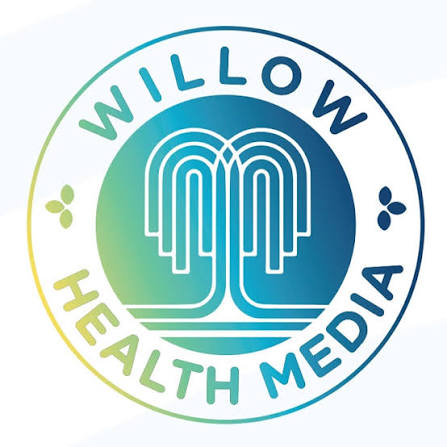
The tumours were benign, and the relief that came with negative cancer results was short-lived as the growth was such that “I cannot breathe well,” Lucy said at the family’s Othaya home.
“I breathe through the mouth. I eat soft meals,” she told Willow Health Media in January, 2025. The operation was in April. Willow has been documenting her surgery journey ever since, in a medical case riddled with escalating and disrupted domestic life.
In 2017, Rev Fr Joseph Waithaka walked into Lucy’s life and refused to walk out
“My marriage was affected because of Lucy’s illness,” says her mother. “Her father said we should leave his home because they don’t have sick people where he comes from. He left in 2008 and has never returned.”
Single, broke and asthmatic, Peris carried the weight alone. “It stresses me,” she says. “I ask God for strength. I have to be strong for my child. What else can I do?”
But in 2017, Rev Fr Joseph Waithaka walked into Lucy’s life and refused to walk out. “Lucy is my friend,” says Fr Waithaka. “I saw her condition, and I requested to see the background, then we organised a harambee. I met Prof Symon Guthua and explained to him. We made a decision to assist Lucy.” They also reached out to Dr Margaret Mwasha, a prosthodontist, and brought Lucy’s case to Archbishop Anthony Muheria, who approached the Nairobi Hospital through Prof Guthua.
Prof Guthua explains the magnitude was what was at stake as “Nobody has done this, so we want to make sure that we do it the right way and reconstruct her back.” Lucy’s small body frame also meant “There’s no place you can start going for bones to reconstruct her. It’s not there. Right? And you make her even weaker. You make her disabled. So, we have patient-specific implants made according to how she is now.”
The hospital’s Director of Medical Services and Research, Mr Samuel Odede, remembers the challenge of “Trying to get the funds to perform this corporate social responsibility, but we managed.”
Digitally mapping and isolating the exact shape of the patient’s skull and bone
But first, the surgical team needed custom-made titanium implants to reconstruct her face. These alone had to be flown from Belgium and designed specifically for Lucy’s reconstructed face. It cost Ksh5 million (approx. $ 38,850 USD). Next came planning the surgery, “A gruelling 18 hours, pro bono, bless them,” Odede says. “These are our true heroes and heroines.”
The surgery was Lucy’s fifth and, if successful, would be her last. The surgical team guided her through the surgery using a 3D model, detailing each cut and reconstruction, her mother absorbing every word.
Michael Mwasha, the biomedical engineer behind the implant’s designs, explains how the process starts by digitally mapping and isolating the exact shape of the patient’s skull and bone. Next, the damaged or diseased portion of bone is virtually identified and removed from this digital model. Finally, a custom implant is designed and created to precisely fit the space left after the virtual removal.
To see the Complete Story, Download your copy of our Magazine using the Button below