


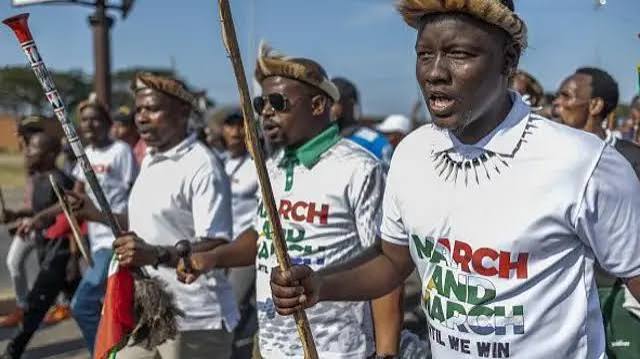
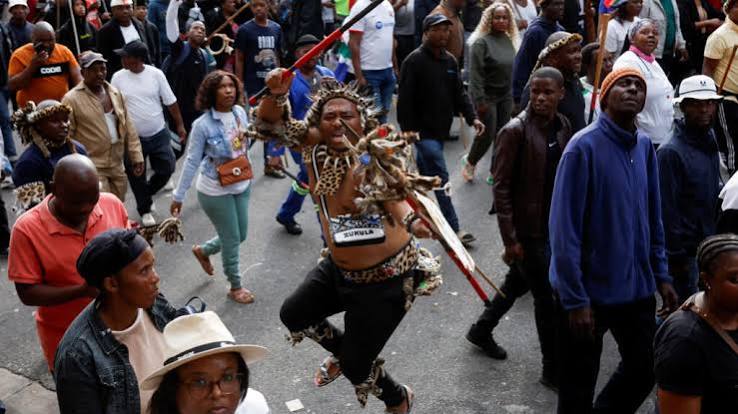
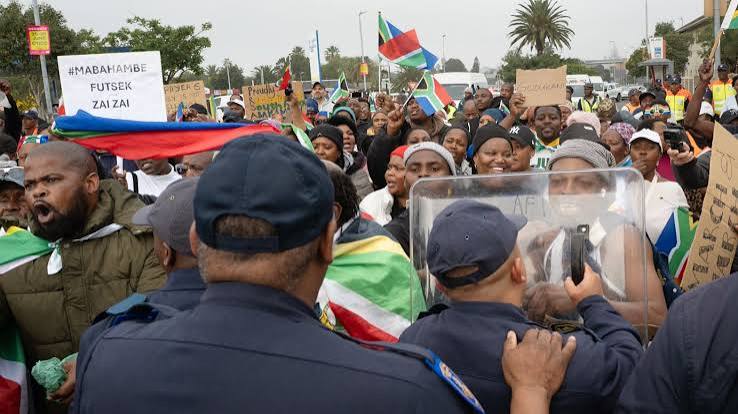
South African police have arrested more than 900 people during nationwide anti-migrant protests that were mostly peaceful but at times turned violent with shops looted and one person shot dead.
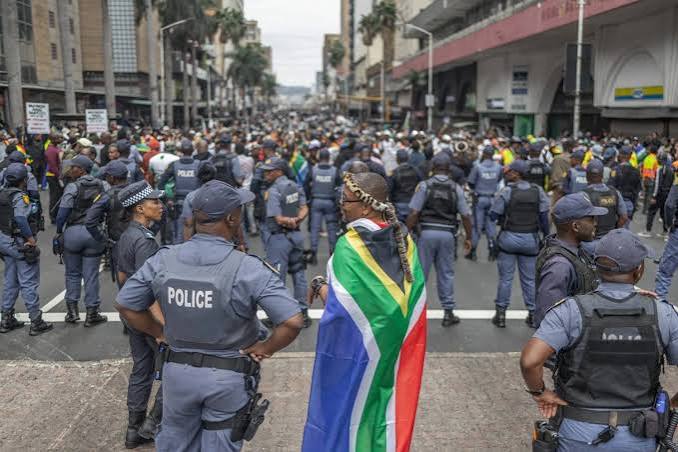
The demonstrations on Tuesday were organized by a coalition of more than 20 civil society groups, including the March and March movement. They were called to mark an unofficial “deadline” for undocumented migrants to leave the country.
Of 120 marches held across South Africa, 108 were peaceful while 12 saw police intervention, Deputy National Police Commissioner Tebello Mosikili said at a news conference on Wednesday.
Mosikili stated that reasons for the arrests ranged from public violence and robbery to immigration violations. The Western Cape recorded the highest volume with 215 arrests, followed closely by the Eastern Cape with 208.
A statement issued by the Presidency said President Cyril Ramaphosa held an emergency meeting on Monday with key protest organizers to call for calm.
In the statement Ramaphosa acknowledged the core grievances of the demonstrators, writing: “South Africans have raised deep concerns about illegal immigration, border management, pressure on public services. … These concerns are real, and they deserve to be heard.”
There has been a wave of arrests made across South Africa as xenophobic tensions erupted into nationwide marches. However, President Ramaphosa drew a line at unlawful behaviour. In is words “Whatever the motivation, taking the law into one’s own hands is vigilantism and has no place in our constitutional democracy.”
Despite those warnings, localized flare-ups occurred.
In Johannesburg’s Alexandra township, police confirmed one person was shot dead late on Tuesday during looting of foreign-owned informal corner shops, known locally as spaza shops. Soldiers were also dispatched to Johannesburg’s inner city Hillbrow neighbourhood after a shooting that injured two people, including a 17-year-old.
In the coastal city of Durban, thousands of protesters marched chanting “Abahambe!” (“They must go!”)
‘March and March’ leader Jacinta Ngobese-Zuma addressed the crowds, warning that demonstrations would continue every Thursday until the government enforces stricter border controls.
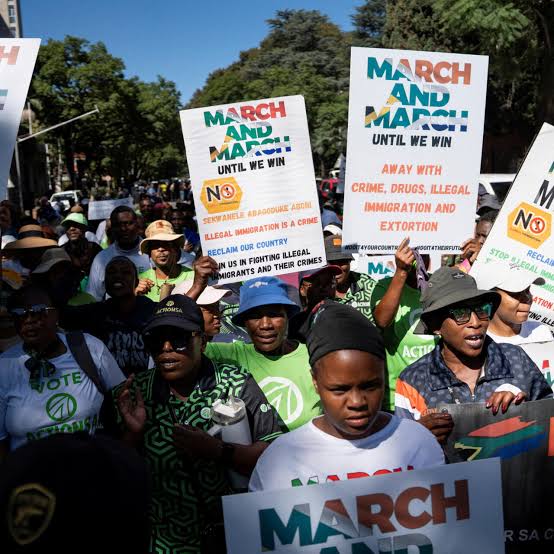
Human rights groups, including Amnesty International South Africa, condemned the targeting of migrants, arguing they are being used as scapegoats for deeper socioeconomic failures, high unemployment and a backlogged asylum system.
Xenophobic attacks: Is South Africa still safe for Africans?
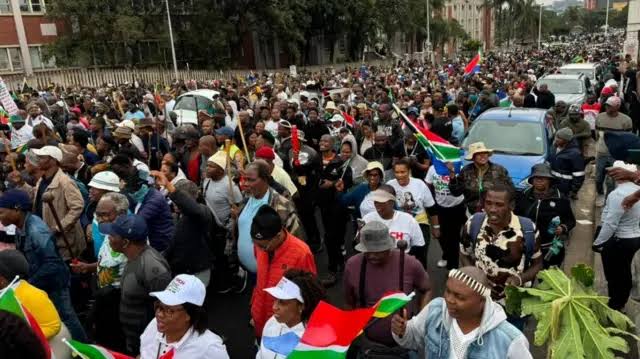
Thousands of people took part in demonstrations across South Africa calling for tougher action against undocumented migrants, in what some accounts describe as the largest anti-immigration mobilization in recent years.
The rallies, which took place in cities including Johannesburg and Durban, were organized by citizen-led groups demanding that migrants without legal status leave the country. Organizers insist the campaign is about law enforcement and social stability, not xenophobia.
Some protesters set informal deadlines for migrants to leave, while others warned of continued pressure on authorities if demands are not met. Reports from the protests also indicated isolated clashes, including stone-throwing and looting in some areas, with security forces deployed to prevent further escalation.
Against this backdrop, Africanews Debates asked a central question: Is South Africa still safe for African migrants?
‘Fear remains widespread’
Migration researcher Dr. Rebecca Walker told the programme that even where large-scale violence had not materialized, fear and intimidation remained deeply rooted.
She warned that migrants perceived as foreign, including those from other parts of South Africa, were increasingly vulnerable, particularly in informal settlements and economically stressed communities.
‘A deeper political and historical problem’
Jean-Victor Nkolo, an African affairs and political analyst, said the current tensions reflected deeper issues of leadership, history and national identity.
He argued that South Africa’s migrant experience should be understood within a wider African context, pointing to the continent’s long history of cross-border movement and shared struggle narratives.
‘I do not feel safe’
For some migrants on the ground, the situation is already having direct consequences.
Eric Kwame Cosmos, a Ghanaian accountant who has lived in South Africa since 2014, said he is now preparing to return home after years in the country, citing growing insecurity.
“I don’t feel very safe,” he said, adding that uncertainty around immigration documentation and public sentiment has left him feeling vulnerable and confined to his home.
Economic pressure and public anger
The debate also highlighted competing interpretations of the crisis, with some linking anti-migrant sentiment to unemployment, inequality and pressure on public services.
Others argued that migrants are being unfairly blamed for structural economic challenges, with little evidence to support claims connecting them to crime or job losses.
A divided national conversation
South Africa’s government has repeatedly condemned violence against foreign nationals, while also describing undocumented migration as a challenge that must be addressed through law enforcement.
But analysts say the political language around migration risks deepening divisions, as vigilante groups, political movements and online discourse continue to shape public perceptions.
As tensions persist, the question remains unresolved, not only in South Africa, but across the continent.
Additional Sources: Aljazeera , Africa News