

By Bright Simons – Thinker / President, mPedigree & Vice President, IMANI Ghana
Breakneck resource extraction in Africa creates management challenges that even the most competent of leaders will struggle to overcome.
African governments get a lot of bashing for stealing and mismanaging their country’s natural resources.
Some, including progressive non-profit organisations in the Global North, insist that most of the culprits, like multinational corporations, come from the rich world.
Some African leaders admit that they can do better. Experts push for a move away from blame-sharing to collective action to drive credible solutions.
A challenge with much of this debate is that often the premises are based on a gross overestimation of Africa’s true natural wealth. Secondly, many commentators do not account for another critical issue: adjustment timeframes, the subject of this article.
Nigeria vs Norway
Take for instance the comparison of Nigeria to Norway by some non-governmental organisations. If Norway exported all its oil output today, in raw form, and shared the proceeds equally, each citizen would receive ~$31 in their bank account. The average Nigerian would be lucky to get 41 US cents (i.e. ~$0.4) if Nigeria did the same with its exports. No shifts in policy quality would change this bleak fact.
Some also lament that 65% of government revenue in Nigeria today comes from oil, versus 27% in 1970, when it produced almost the same amount of oil as today. There clearly has been policy mismanagement over the years. But it helps to realize that Nigeria went from producing 17,000 barrels of oil per day in 1960 to more than 1.5 million barrels of oil in just over a decade. That’s nearly a hundred-fold rise!
It switched from being a country where oil provided 7% of government revenue in 1965 to a country where oil supplied nearly 60% of revenue in 1971, in just six years. There was simply no time for adjustment. In that interval, oil production grew 600% to more than 1.5 million barrels a day. Even in these hyper-technological times, it can easily take more than a decade to build a refinery. It is therefore hardly surprising that at the end of this transition, the country had only one refinery, the 55,000 barrels-per-day Port Harcourt plant.
The Gulf powerhouses
Consider, in contrast, Saudi Arabia. For the full decade between 1948 and 1958, oil production rose from around 390,000 barrels a day to 1.05 million barrels a day, a reasonable 270% or so rise (compared to the nearly 10,000% surge seen in Nigeria during its ‘formative decade’).
Saudi Arabia had a lot more time to adjust. It took 50 years from the discovery of oil – from 1923 to 1973 – and 41 years of nationhood, for the country’s elite to mature the national strategy, including the famous blueprint developed with the Stanford Research Organisation.
The United Arab Emirates (UAE) also had a similar pattern of adjustment. Yet, none of these Gulf powerhouses can be said to have fully mastered the transition to a diversified economy.
“Even the best policy managers and political leaders cannot adapt to such a rapid shift in core industries, volatility in fiscal trends, and their resulting social and environmental consequences”
Equatorial Guinea, a favourite target of anti-mismanagement campaigners, also saw output rise from 7,000 barrels per day in its main producing field, Zafiro, in 1996 to 280,000 barrels per day by 2004. In a mere 8 years, it transformed into a complete petrostate.
My point is not to excuse Nigeria’s descent into oil sector leadership chaos in the 1980s or to understate the lost opportunities for broad governance reforms in Equatorial Guinea. Rather, I am only drawing attention to a major, often overlooked, yet foundational, factor.
The aggressive ramping up of production is sometimes followed by an equally sudden drop. In 2016, oil and condensate production in Equatorial Guinea was nearly 250,000 barrels per day (down from 375,000 barrels in 2005). In barely five years, output had halved. Today, the country struggles to produce 52,000 barrels of oil on a good day.
Even the best policy managers and political leaders cannot adapt to such a rapid shift in core industries, volatility in fiscal trends, and their resulting social and environmental consequences.
Ghana’s oil production estimates
Sometimes, these aggressive ramp-up decisions are driven by foreign investors, eager to validate fantastic pre-production estimates, itself a perverse function of the widely held, but poorly evidenced, perception of vast African natural wealth.
Ghana has suffered from this. Fantastic estimates created ahead of oil production projected output at 500,000 barrels of oil per day by 2024. Reality turned out to be a lot more modest. Today, output hovers around 130,000 barrels a day.
“The pockmarked landscapes strewn with abandoned pits are a clear testament to the timeless maxim: easy come, easy go”
All manner of aggressive field reengineering and pressure maximization by pumping loads of water and gas into the fields have failed to stimulate consistent output growth.
In 2022, when production at the country’s flagship field, Jubilee, dropped to 80,000 barrels per day, a $1bn-operation to increase the milking rate got underway. The goal: an additional 30,000 barrels a day. In the first few months after the Jubilee South East expansion program wrapped up, the promised increase did manifest. But in a few months, decline set in again. Today, Jubilee is at 90,000 barrels of oil per day and dropping.
It is not only in petroleum that this fast milking logic operates. When Ghana’s manganese oxide reserves were depleted at Nsuta, the existing carbonate ores were seen as low-grade and low-value. Until the new private owners discovered new chemical pathways that can enhance furnace productivity when manganese carbonate is used in steel production.
Within six years, production had ramped up 20-fold. However, infrastructure commitments were not met. The old ‘low-grade’ pricing logic was still retained leading to serious transfer pricing problems that the government of Ghana estimated in 2019 as exceeding $360m in losses to the state.
Meanwhile, the latest Chinese majority owners, and their Dutch minority owners and local managers, have declared Ghana as the world’s largest holder of manganese reserves, even though the data disproves this. Despite the government’s insistence on moderating output and investing in the infrastructure, the investors continued to push for a tripling in production volumes, to 12 million tonnes, overnight.
In the 10 years that Ghana’s rapidly spiking gold production made it Africa’s largest producer, we have already seen boom-and-bust effects in towns like Tarkwa and Dunkwa. The pockmarked landscapes strewn with abandoned pits are a clear testament to the timeless maxim: easy come, easy go.
About the Author
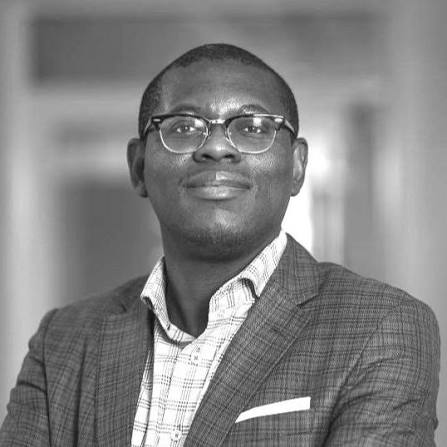
The Author Bright Simons is a Ghanaian Technologist, Social Innovator, Entrepreneur, Writer, Social and Political commentator. He is the Vice-President, in charge of research at IMANI Centre for Policy and Education. He is also the Founder and President of mPedigree.
Bright Simons is the President of the mPedigree Network, a ‘social enterprise’ noted for its work to expose makers and distributors of counterfeit medicines, and for creating a computer program called Goldkeys that enables the verification of certain products in some countries.
Simons writes for the Huffington Post, Harvard Business Review Digital and the Royal African Society’s online magazine, African Arguments. He is a regular contributor to the BBC’s Business Daily programs.
The Financial Times has described Bright Simons as “frighteningly clever. Bright Simons has co-authored several pieces of research at IMANI.
In 2009, Simons was a TED Fellow. The World Economic Forum also recognized Simons in 2012 as a Young Global Leader and The mPedigree Network as a Technology Pioneer.
The Salzburg Global Seminar named Bright Simons a Fellow in 2011. He credits his Salzburg engagement as helping accelerate movement of the mPedigree Network from Africa to India and China.
In 2012, The Diplomatic Courier and Young Professionals in Foreign Policy named Simons as one of the Top 99 under 33 Innovators for his work with mPedigree.
In March 2016, Fortune magazine listed Simons among the World’s 50 Greatest Leaders, placing him just ahead of Canadian Prime Minister Justin Trudeau. He has also been ranked by Africa Youth Awards among the 2016 100 Most Influential Young Africans.
In October 2016, he won the Innovator of the year at the All Africa Business Leaders Awards for West Africa category and All Africa category respectively.
In December 2017, he was announced as an Eliasson Prize Laureate and a Tallberg Global Fellow in New York City. In 2018 he was inducted into Power Brands LIFE – Hall of Fame at London International Forum for Equality.
In April 2019, he received the Skoll Award for Social Entrepreneurship on behalf of mPedigree.
Additional Sources: www.brightsimons.com , Wikipedia, The Africa Report