



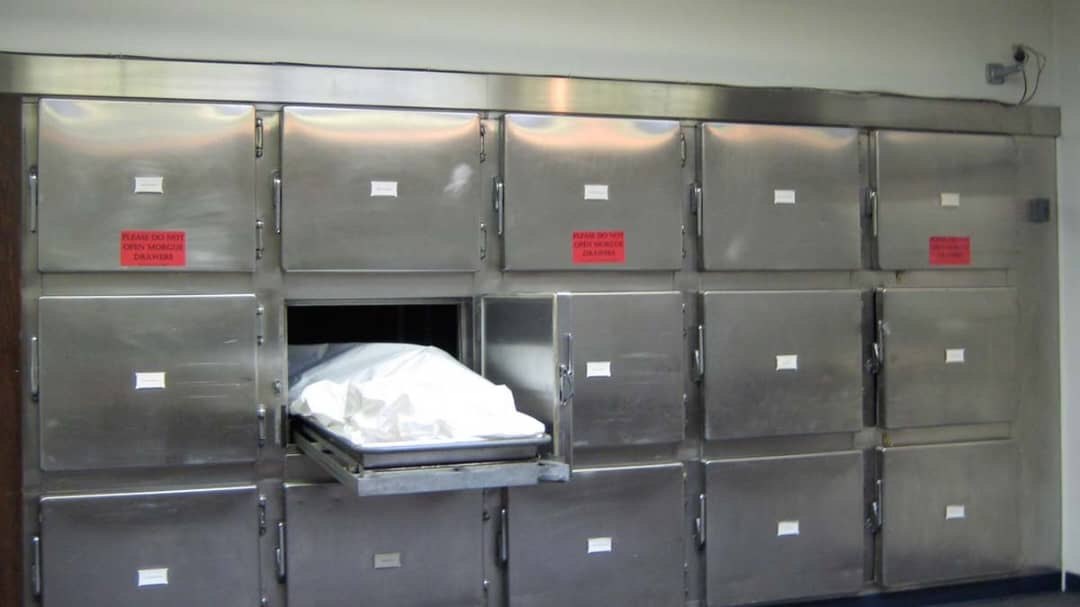
The Yaoundé Central Hospital in Cameroon’s capital, has renewed an appeal to families to identify and claim dozens of bodies left in its morgue, highlighting a growing but often overlooked challenge confronting hospitals in Cameroon and across Africa.
In a notice published on July 7, the hospital said 80 bodies remained unclaimed as of July 6 and urged relatives or anyone able to identify the deceased to come forward.
“Any person who recognizes one of the deceased is requested to report to the mortuary for identification and withdrawal procedures,” the hospital said.
It added that the list of the deceased, accompanied by their photographs, would be displayed at the hospital’s mortuary to facilitate identification. The hospital also expressed its condolences to bereaved families and thanked the public for its cooperation.
While the appeal is intended to help families locate missing loved ones, it also underscores a recurring problem facing public hospitals across Cameroon, where morgues periodically fill beyond capacity as bodies remain unclaimed for weeks, months, and sometimes years.
Health officials say many unclaimed bodies belong to people who die without carrying identification or whose relatives cannot be traced. Victims of road traffic accidents, violent crime, people who die alone in cities, and unidentified patients are among those most likely to remain in hospital mortuaries.
Poverty is another major factor. Funeral expenses in Cameroon can be prohibitively high, often including outstanding hospital bills, transportation of the body to a family’s hometown or village, burial costs, and religious or traditional ceremonies. For households already facing economic hardship, claiming the body of a deceased relative may simply be beyond their means.
Rapid urbanization and migration have also weakened traditional family networks. Many Cameroonians live far from their relatives in search of work or education, making it difficult for hospitals to quickly locate next of kin when someone dies unexpectedly.
In some cases, family disagreements over inheritance, burial rights, or funeral expenses delay the release of bodies. Police investigations, court proceedings, and difficulties confirming a person’s identity can also keep remains in hospital morgues for extended periods.
The challenge has been compounded by insecurity in parts of Cameroon. Years of conflict in the Northwest and Southwest regions and attacks by armed groups in the Far North have displaced communities and separated families, complicating efforts to identify victims and notify relatives. Similar challenges have been reported in several African countries affected by conflict and humanitarian crises.
The consequences extend far beyond grieving families. Unclaimed bodies place growing financial and logistical pressure on hospitals, which must maintain refrigerated storage, consume significant electricity, and dedicate staff and limited mortuary space to preserving remains. As morgues become overcrowded, hospitals face increasing difficulty accommodating new deaths, particularly following major accidents, disease outbreaks, or other emergencies.
The accumulation of unclaimed bodies also creates legal and administrative burdens. Before authorities can authorize the burial of unidentified or unclaimed remains, hospitals and law enforcement agencies must make reasonable efforts to identify the deceased and locate relatives in accordance with applicable procedures.
The problem has drawn concern from humanitarian organizations. The World Health Organization, the International Committee of the Red Cross, and the International Federation of Red Cross and Red Crescent Societies have warned that the dignified management and identification of the dead are essential for families and communities.
“The consequences of mismanagement of the dead include long lasting mental distress for family members as well as social and legal problems,” the organizations said in joint guidance. They stressed that every effort should be made to identify the deceased before burial, helping families find closure while protecting legal and administrative rights.
Experts say reducing the number of unclaimed bodies will require stronger civil registration and identification systems, improved forensic services, closer coordination between hospitals and law enforcement, and greater financial assistance for families struggling to meet burial costs. Public awareness campaigns encouraging people to carry identification and keep emergency contact information up to date could also help.
By publishing its latest list of 80 unclaimed bodies, Yaoundé Central Hospital hopes to reunite families with missing relatives while easing pressure on its overcrowded mortuary. More broadly, the appeal serves as a reminder that every unclaimed body represents not only a logistical challenge for hospitals but also a family left searching for answers and a society grappling with the social and economic realities that too often prevent the dead from receiving a timely and dignified burial.
By Ntaryike Divine Jr