By Francisco Viegas (The African Digest News, Angola)
In 2024, Morocco welcomed 17 million tourists. Kenya drew 2.5 million. South Africa, around 9 million. Angola, in a pre-pandemic year, reached a total of 218,000 international arrivals, and last year, according to the Tourism Minister, grew its leisure tourist segment to just over 52,000. For a country of 36 million people sitting on 1,650 kilometres of Atlantic coastline with deserts, waterfalls, wildlife parks and a culture that has never been properly sold to the world, that gap is a project field.
That project got a very public push last week in Luanda, when Angola hosted the Global Tourism Forum Investment Summit from 17 to 19 June, more than 1,000 delegates from over 60 countries, two heads of state, the UN Tourism Secretary-General, and the commercial aviation arms of Emirates, Qatar Airways, Turkish Airlines, Ethiopian Airlines, TAP Air Portugal, Kenya Airways and South African Airways, all in the same room.
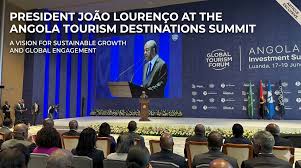
Whether the room matters more than what comes out of it is a fair question. But Angola, at least, showed up differently than it ever has before.
Selling “Green Oil”
The framing that Angola’s Tourism Minister Márcio Daniel has been pushing since ITB Berlin in March — where Angola was the official host country of the world’s largest tourism trade fair — is deliberate and unambiguous: “Tourism is Angola’s green oil.” It is a political statement dressed as a pitch. The country needs a substitute, and it knows it.
Oil currently accounts for 28.9% of Angola’s GDP and 95% of its export revenues, according to the African Development Bank. Production has fallen by nearly half since its 2008 peak of two million barrels per day, it averaged 1.03 million in early 2025. Angola grew 4.4% in 2024, its strongest performance in five years, driven largely by non-oil sectors. That number looks healthy until you notice it still barely outpaces the country’s 3% population growth rate.
Tourism, for now, contributes an estimated 0.01% of GDP. The government’s National Tourism Plan — PLANATUR — sets a target of 1.9% by 2027, with 500,000 new jobs and doubled revenue. To get there from where Angola stands today requires more than a summit. But a summit is where deals start.
Who Came, and What They Said
Mozambique’s President Daniel Chapo flew in, his visit carrying weight both diplomatically and commercially, as Maputo and Luanda are increasingly invested in the idea that two Lusophone economies with adjacent Atlantic coastlines and shared infrastructure ambitions are stronger together than apart.
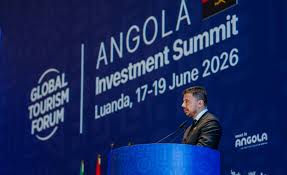
UN Tourism Secretary-General Shaikha Al Nowais was present, alongside ministers from across Africa, Europe and the Middle East, and representatives of sovereign wealth funds and institutional investors. The summit was designed as a capital mobilization platform, not a trade fair — closed-door roundtables, B2B meetings, investment sessions structured to move from conversation to term sheet.
Bulut Bağcı, President of the World Tourism Forum Institute, set the tone directly: “Angola represents one of the most promising investment frontiers not only in Africa but globally.” The language is promotional. The presence of Hilton, Marriott and IHG in the pipeline suggests it is not only promotional.
The Hilton Signal
The most concrete headline from the summit’s margins: Angola’s Tourism Minister met with Guy Hutchinson, Hilton’s President for the Middle East and Africa, to explore additional hotel pipeline opportunities across the country. Hilton already has three confirmed properties in Angola — the Hilton Luanda Hotel Godinho, with 220 rooms, opening in 2027; the Hilton Garden Inn Luanda Airport, 200 rooms, scheduled for 2028; and the DoubleTree by Hilton Cabinda Futila Residences, a residential complex with around 290 apartments and ten oceanfront villas, due this year.
Hilton operates across more than 120 countries. Angola is not a new discovery for the group — but the pace of commitment is new. Marriott and IHG have also announced or are executing projects in the country. When three of the world’s largest hospitality brands are building simultaneously in the same market, it functions as a signal to mid-tier developers and tour operators watching from the outside.
The unanswered question — and it matters — is where. All three Hilton properties are in Luanda or Cabinda. Angola has the Calandula Falls in Malanje, one of Africa’s largest waterfalls. It has the Kissama National Park within an hour of the capital. It has the Namibe desert. PLANATUR explicitly identifies investment in “regional airports and infrastructure” outside the capital. The hotels, for now, are not there. The international confidence in Angola’s tourism story has not yet moved beyond the coastline it already knows.
The Numbers Beneath the Ambition
The tourism growth is real — but the figures require care. Angola’s total international arrivals peaked at around 650,000 in 2013, before falling sharply through a decade of economic contraction and the pandemic. The last confirmed World Bank baseline is 218,000 total arrivals in 2019. The picture coming out of 2025 is a leisure segment only: Minister Márcio Daniel stated in March that leisure tourists reached 52,072 last year, up 20% from 44,000 in 2024 — a meaningful shift in the profile of who is arriving, if not yet in the volume. Angola’s visitors have historically been dominated by business travellers; what the government is now measuring, and promoting, is the segment that stays longer and spends more.
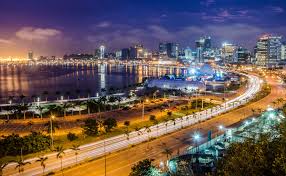
What is shifting structurally is access. In 2023, Angola removed visa requirements for 98 countries. The new Dr. António Agostinho Neto International Airport — under construction outside Luanda — is designed to substantially expand on the current terminal’s capacity. Aviation connectivity, historically one of Angola’s most persistent barriers for leisure tourism, is being directly targeted: the presence of seven major carriers at the summit was not accidental.
The PLANATUR investment envelope is significant — though the full figures remain subject to the kwanza’s volatility and the government’s ability to mobilise private capital alongside public commitments. What is clear is that the plan covers energy, transport, telecommunications and water — the basic conditions without which no hotel brand can operate at scale outside a capital city.
A Turning Point, or a Well-Staged Moment?
Angola has been here before, not at this scale, but in the business of announcing its tourism potential to the world. What is different in June 2026 is the specificity of the commitments and the breadth of the audience that showed up to hear them.
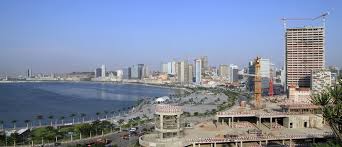
The real test will come in the next 24 months. Hilton breaks ground, or it doesn’t. The Agostinho Neto airport opens on schedule, or it slips. A tour operator runs its first group to the Namibe, or it sends them to Namibia instead. Summits do not build hotels. Investment does.
The leisure tourist count Angola is now tracking — 52,072 in a country of 36 million on 1,650 kilometres of Atlantic coast — tells you exactly where the starting line is. It also tells you there is nowhere to go but up.
Sources: Plataforma Media — Minister Márcio Daniel statement (March 2026); African Development Bank Fact Sheet 2025; World Bank Angola Overview 2025; Breaking Travel News / Hilton official press release (June 2025); African Marketing Confederation (June 2025); Travel and Tour World (June 2026); MICE Travel Advisor (March 2026); allAfrica/ANGOP (June 2026); Travel Tomorrow (June 2026); ITB Berlin (March 2026); World Bank International Tourism Arrivals — Angola (2019)

By Francisco Viega (The African Digest News, Angola)