
Burkina Faso has opened its first Gold Refinery pushing ahead with plans to better organize the commercialization of the precious metal in one of the continent’s top producers.
The African Nation has opened its first gold refinery as its military-led government seeks greater economic sovereignty after severing ties with traditional Western partners.
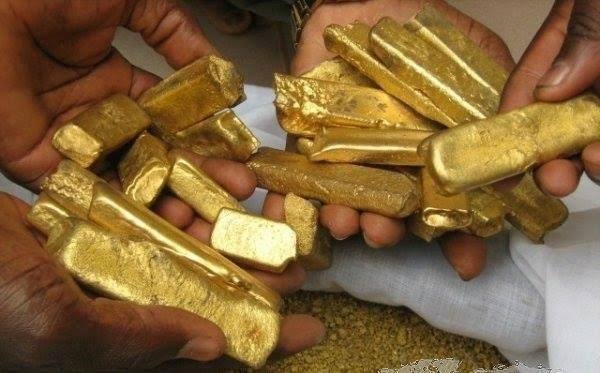
The West African Nation is Africa’s third leading gold producer, churning out more than 94 tonnes of the precious metal last year, according to the World Gold Council. But authorities traditionally struggle to control the informal gold mining sector, which has been blighted by jihadist violence and smuggling.
“Burkina Faso has reached a historic milestone in its quest for economic independence,” the presidency said in a statement.
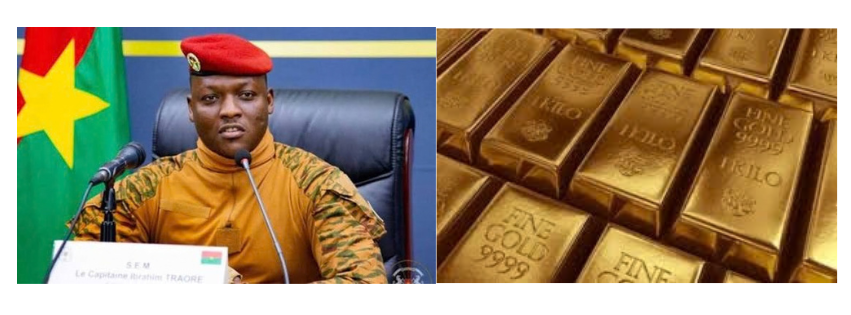
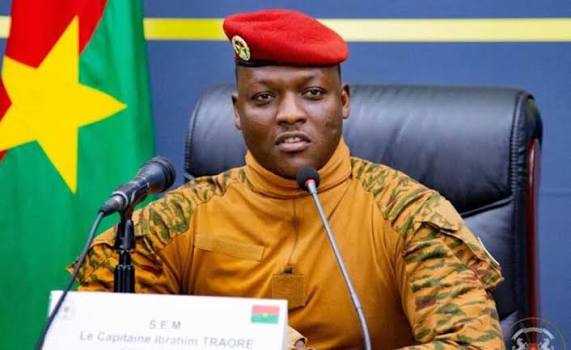
“From now on, gold from Burkina Faso must not only be extracted in Burkina Faso, it must be processed, controlled, valued and certified in Burkina Faso,” President Ibrahim Traore, who has ruled the West African country since a 2022 military coup, said on Monday at the opening of the refinery, known as Raffinor-BF.
Across West Africa, governments are taking steps to reclaim control over their natural resources by rewriting mining codes, banning exports of raw produce and boosting government ownership. Guinea and Ghana recently restricted gold exports. Mali said it was building a gold refinery together with Russia’s Yadran Group, and Ivory Coast announced it would open one next year.
Burkina Faso is one of the region’s main gold exporters, but the sector has been disrupted by extremist violence, which has intensified since the military junta seized power.
Under Ibrahim Traoré, Burkina Faso has presented natural resources as a sovereignty issue. The refinery is part of the junta’s campaign to reduce its dependence on foreign states and companies, in particular the West, and to process natural resources at home, instead of exporting raw produce.
Burkina Faso has nationalized several gold mines and launched a push to revitalize the country’s industrial output, from cotton to tomatoes and textiles.
The leader, who inaugurated the refinery in the capital Ouagadougou — has pushed an agenda of domestically driven and anti-Western policies with the proclaimed aim of reclaiming national sovereignty.
“Natural resources belong to the people,” Traore said. “They must contribute to improve their living conditions, with respect for the environment, social justice and in the interest of future generations.”
Built on five hectares in the capital Ouagadougou, the refinery has a capacity of 164 tonnes of gold per year, the presidency said, with a target capacity of 515 tonnes. Burkina Faso produced 94 tonnes of gold last year, according to the authorities.
Raffinor-BF cost more than 11 billion CFA francs ($19 million) and was financed by the government, including through the National Precious Metals Company, known as SONASP, and by the private sector.
The West African country of 23 million people has endured years of violence by extremist groups linked to al-Qaida and the Islamic State group. Government forces have also been accused of extrajudicial killings.
“Our ambition is no longer to be a country that simply extracts and ships its raw materials abroad,” the Presidency quoted Traore as saying.
“We want to refine all our metals locally… we want to have the entire value chain here.”
Burkina Faso suspended exports of gold from informal mining in 2024 in a bid to “better organize” the sector, Mines Minister Yacouba Zabre Gouba said at the time.
Traore had warned that vast quantities of gold were leaving the country “fraudulently”, which “helps to fuel terrorism”.
Gold, seen as a safe haven investment, has hit record prices in recent months in a lucrative market that fuels different forms of trafficking, including for jihadists in the Sahel region.
The presidency said that the National Gold Refinery of Burkina Faso (RAFFINOR-BF), which had been under construction since 2023, has an annual production capacity of 164 tonnes of gold, rising to a projected long-term capacity of up to 515 tonnes.
The refinery, which cost 11 billion CFA francs ($19 million) to build, was funded by the state in partnership with the domestic private sector, it added.
Additional sources: AFP News, Africa News