



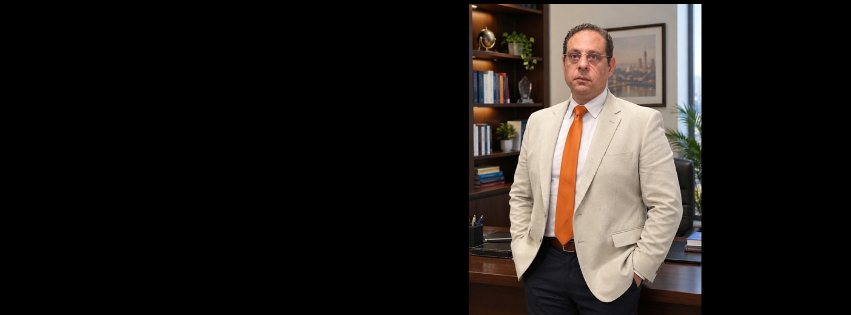
By Dr. Mohamed Rifaie – Founder, NileED / Educational Consultant & International School Director
The Global landscape is shifting beneath our feet at an unprecedented velocity. Industries are adapting, paradigms are fracturing, and old systems are rapidly becoming obsolete. Yet, walk into the average modern classroom, and you will find an industrialized framework largely frozen in time. For generations, traditional education has clung to rigid curricula and uniform delivery methods, stubbornly expecting identical outcomes from vastly different minds.
In doing so, we have systematically ignored the most fundamental rule of human nature: life is built on variety. Every classroom is an intricate ecosystem composed of distinct characters, shifting personal trends, varied habits, diverse capabilities, and specialized talents. To force this rich human variance into a singular, assembly-line mold is no longer just ineffective; it is an organizational failure.
If our students are to thrive in an evolving world, our institutional methods must evolve with them. Surface-level differentiation; often treated as an exhausting, retrofitted add-on to an already bloated lesson plan; is a relic of the past. Genuine, consistent Personalized Learning is the only viable path forward.
To operationalize this shift and embed it into the DNA of school culture, leaders must implement a deliberate, two-pronged strategic framework: systemic institutional continuity and micro-level instructional precision.
1. Systemic Continuity: The Institutional Memory of the Learner Profile
Consistency is the ultimate anchor of personalized learning. Too often, a student’s educational journey is fragmented; every September, they hit a hard reset because their new teachers lack the institutional memory of their past growth. The student is forced to spend months proving who they are, while the teacher wastes valuable instructional time playing catch-up.
To bridge this operational gap, schools must establish a comprehensive, cumulative Learner Profile that transitions seamlessly from one key educational stage to the next.
Because true development is multifaceted, this profile cannot merely be a ledger of academic grades. It must serve as a dynamic, holistic record of both academic milestones and behavioral evolution. To maintain absolute integrity and data security, this tool requires strict institutional governance:
- Confidential Stewardship: The profile remains under the direct, secure custody of the respective Stage Principal to guarantee absolute confidentiality.
- Targeted Access Ecosystem: Access is restricted to a precise circle of stakeholders: the Senior Leadership Team, the specific educators actively interacting with the learner, and the Designated Safeguarding Lead (DSL) team. This ensures that student well-being and safeguarding are woven directly into their academic trajectory.
- The Pre-Term Strategic Audit: Before the academic year even begins, educators must conduct an exhaustive study of these profiles. On day one, the teacher does not walk into a room of strangers; they step into a room of familiar profiles, fully prepared for the inherited variations, distinct triggers, strengths, and personal trends of their cohort.
Secure Stage Principal Custody
│
├──► Senior Leadership Team (Strategic Oversight)
├──► Current Classroom Teachers (Instructional Customization)
└──► DSL Team (Holistic Safeguarding & Well-being)
By institutionalizing this practice, schools eliminate the friction of transitions. Even in the event of mid-year teacher replacements, the learning environment remains completely stable. The face at the front of the room may change, but the system’s deep understanding of the child remains beautifully uninterrupted.
2. Micro-Learning: The Engine of Modern Instructional Design
If the holistic profile provides the overarching institutional strategy, Micro-Learning serves as the precise tactical execution within the classroom.
Traditional lesson planning frequently relies on large, “chunky” objectives stretched across an extended period. This macro-approach naturally creates dead time, leaving struggling students alienated and advanced students profoundly under-stimulated. Micro-learning shatters this dynamic by requiring teachers to deconstruct their lesson plan into tight, bite-sized, sequential micro-objectives.
The Golden Rule of Modern Classroom Governance
“Class control starts from the teacher’s lesson plan.”
Every single micro-objective demands its own targeted instructional delivery method and a corresponding, hands-on active learning task. This shifts the classroom dynamic from passive absorption to high-velocity engagement, guaranteeing vital operational outcomes:
- Simultaneous Multi-Level Satisfaction: Natively accommodates varying readiness tiers and learning styles without requiring separate, exhausting tracks.
- Elimination of Cognitive Exhaustion: Keeps learners constantly moving through distinct phases of problem-solving and production.
- Radical Reduction of “Boredom Windows”: By shifting the mode of interaction every 10 to 15 minutes (or even less), the margin for behavioral disruption narrows to almost zero. Misbehavior is rarely a disciplinary issue at its root; it is almost always the downstream symptom of systemic boredom.
- Drastic Reduction of Teacher Talking Time (TTT): Flips the script so that students drive the heavy cognitive lifting, transforming the educator from a broadcaster into an instructional architect.
Confronting the Digital Focus Shift: The “Scroll-Down” Reality
To build schools that work, we must be radically honest about the psychological landscape of the modern student.
Let us be frank: very few adults possess the patience to tolerate four consecutive 45-minute lectures, sitting motionless in the same spot, passively copying notes off a board or reading out of a textbook. Yet, we routinely demand this level of compliance from young learners whose cognitive habits have been completely re-engineered by the digital world.
Today’s learners are neurologically conditioned by short-form digital mediums. They navigate an ecosystem of rapid-fire TikTok videos and social media reels where relevance is determined in milliseconds. Their brains are wired for immediate engagement; if a piece of content fails to stimulate or connect, a flick of the thumb instantly scrolls it away.
Traditional Classroom ──► 45 Minutes of Passive Lecturing ──► Cognitive Disconnection & Misbehavior
Modern Student Brain ──► Conditioned by Rapid Relevancy ──► Seeks Immediate Engagement
Micro-Learning Solution ──► 10-Minute High-Activity Bursts ──► Sustained Focus & Class Control
While older generations developed the patience to sift through pages of text before reaching a conclusion, the modern generation operates on a faster, punchier cognitive loop. We cannot fight this environmental reality with outdated disciplinary measures or rigid compliance demands. Instead, we must adapt our delivery. Micro-learning respects this cognitive evolution, capturing and holding focus through rapid, structured bursts of purposeful activity before attention has the chance to drift.
Orchestrating an Authentic Educational Architecture
True school reform occurs when we stop trying to fix the learner to fit the system, and finally fix the system to fit the learner. Relying on superficial differentiation to patch up an antiquated, monolithic curriculum is an exhausting, losing battle for teachers and students alike.
By anchoring our educational institutions in the twin pillars of continuous learner profiles and micro-learning lesson designs, we build an authentic, human-centric architecture. We protect the continuity of the student’s experience, safeguard their emotional and behavioral well-being, and transform classrooms into vibrant hubs of active discovery. It is time to retire the assembly-line mindset and boldly implement a personalized framework designed for the evolving world our students will inherit.
About the Author

The Author, Dr. Mohamed Rifaie is a regular Columnist with the African Digest (Magazine, News and Media).
Dr. Mohamed Rifaie is a renowned Educational Consultant with proven experience in revolutionizing learning and Education across the African Continent and Globally.
He is also the Founder of NileED, Egypt (An International Educational Consulting Organisation). He brings to bear decades of experience in Educational Leadership, Curriculum Development and cross-functional Team leadership.
Dr. Mohamed Rifaie’s core mission is to empower educators and stakeholders to collaboratively shape transformative educational practices.
Stay tuned for more insightful articles from one of Africa’s astute experts in Educational Leadership.