





By Daniel Kontie – Executive Chairman, Africa Continental Engineering & Construction Network Ltd (ACECNL)
Ghana’s property market continues to attract both local and diaspora investors, driven by rapid urbanization, population growth and the perception of real estate as a secure store of value. However, beneath this optimism lies a complex web of legal, institutional and socio-cultural vulnerabilities that routinely expose buyers to significant financial and legal risks.
This article introduces a multi-part series that interrogates the most critical red flags embedded within Ghana’s property ecosystem, issues that are often overlooked until transactions collapse or disputes arise. Drawing on field experience, legal scholarship, institutional reports and land governance studies as one of Ghana’s leading real estate developers and consultants; this overview frames the structural weaknesses that define property acquisition in Ghana.
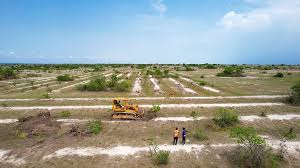
This is the first part of the series setting the stage for a deeper, unfiltered examination of the systemic risks embedded within Ghana’s land and real estate ecosystem, moving beyond surface-level assurances to interrogate the structural weaknesses that continue to trap unsuspecting buyers and investors.
It introduces, in turn, the pervasive multiple sale trap where a single parcel of land can be legitimately “owned” by several parties with seemingly valid documentation; the troubling emergence of litigation as a business model, where disputes are not accidental but strategically engineered; and the dangerous illusion of security created by indentures that lack enforceable legal strength.
It further interrogates the widely misunderstood reliability of Lands Commission searches, exposing how official records can still mislead; questions the assumption that purchasing within a gated development guarantees legal safety; and unpacks the complexities of stool lands, where customary authority, overlapping interests and documentation gaps heighten risk.
The discussion extends to technical manipulations in survey plans, hidden and compounding cost burdens that undermine affordability and the growing menace of land guards that turns ownership into a security concern.
It also highlights the often-overlooked consequences of registration delays, the harsh reality behind the resale illusion in an illiquid market and ultimately, the most critical risk of all, blind trust in a system not fully understood. Collectively, this mother article provides a concise yet comprehensive preview of the issues that will be rigorously unpacked in the subsequent parts of this series.
But before we go into the nitty-gritty of today’s discussion, let me remind you that, the Africa Continental Engineering & Construction Network Ltd stands out as one of Ghana’s leading real estate developers and consultants. From land acquisition, title registration, architectural design, general construction, property development, real estate investment advisory services et cetera, we provide a 360ºC service experience.
If you are ready to move from interest to investment, kindly search on Google, “Africa Continental Engineering & Construction Network Ltd”, visit our property page, explore available properties and reach out to our team for a swift professional service delivery. With thousands of serviced litigation-free parcels of land across Accra and key growth corridors, we are uniquely positioned to help you unlock value in residential, commercial and industrial real estate. Now, let us go into the substantive discussion starting with the Multiple Sale Trap.

The Multiple Sale Trap: When Documentation Is Not Protection
One of the most persistent risks in Ghana’s land market is the phenomenon of multiple sales, where a single parcel of land is sold to multiple buyers, each holding seemingly valid documentation. The assumption that documentation guarantees ownership is fundamentally flawed in a system where title registration is not always definitive and competing claims may coexist.
As noted by the World Bank, weaknesses in land administration systems, including incomplete records and overlapping rights, contribute significantly to tenure insecurity across developing economies. In Ghana, this is compounded by informal allocation systems and fragmented record-keeping, making litigation a frequent, but not always effective recourse.
Litigation as a Business Model: Conflict as an Economic Strategy
Beyond accidental disputes, there is growing evidence that some land conflicts are deliberately engineered. Prolonged litigation, often exacerbated by systemic delays, creates opportunities for certain actors to extract financial value through repeated claims, settlements or procedural manipulation.
Research by United Nations Human Settlements Program (UNHSP) highlights how weak land governance frameworks can incentivize conflict rather than resolution, particularly where enforcement mechanisms are slow or inconsistent. In such environments, disputes become less about justice and more about strategic advantage and this is exact status of Ghana’s property market.
Indenture without Security: The Limits of Legal Documentation
Indentures and land sale agreements are widely relied upon by buyers as proof of ownership. However, many of these documents suffer from critical legal deficiencies, including improper execution, lack of necessary consents, or weak root-of-title verification. The Ghana Lands Commission has repeatedly emphasized the importance of proper documentation and registration, yet gaps in drafting standards and legal awareness persist. Consequently, documents that appear valid on the surface may fail under judicial scrutiny, leaving buyers exposed.
The Lands Commission Myth: When Official Searches Mislead
Conducting a search at the Lands Commission is often perceived as the gold standard of due diligence. While essential, such searches are not foolproof. Data gaps, delays in registration and the absence of real-time updates mean that search results may not fully reflect existing encumbrances or competing interests.
Studies supported by the Food and Agriculture Organization on land tenure systems in Africa underscore the challenges of maintaining accurate and up-to-date land records, particularly in hybrid systems that combine customary and statutory tenure.
Buying from Developers: The Illusion of Structured Security
The rise of gated communities and private developers has introduced a perception of professionalism and reduced risk. However, buyers often overlook critical issues such as underlying land title validity, development permits and existing financial encumbrances. In some cases, lands used for development are already mortgaged, creating competing interests between financial institutions and individual buyers.
The International Finance Corporation notes that weak regulatory enforcement in emerging real estate markets can expose buyers to hidden liabilities, even within formally structured developments.
Watch out for the next part of this insightful article.
About Author

Daniel Kontie is a young enthusiastic Ghanaian Entrepreneur, the Executive Chairman of the Africa Infrastructure Group; comprising the Africa Continental Engineering & Construction Network Ltd (ACECN), Falcon 48 Developers; Africa Infrastructure Energy and Africa Land Banking Investment Ltd. All these are infant establishments, disrupting the conventional way of brand building across the African Continent. Daniel is a columnist, a writer and a member of the Ghana Built Environment Writers Association. He can be contacted via Tel: +233209032280; Email: d.kontie@acecnltd.com; Website: https://acecnltd.com/