
Karura Forest is an urban forest in Nairobi, the capital of Kenya. It is the second largest urban forest in the world after the Tijuca Forest, in Rio de Janeiro located in Brazil. The forest was gazetted in 1932 and is managed by the Kenya Forest Service in conjunction with the Friends of Karura Forest Community Forest Association.
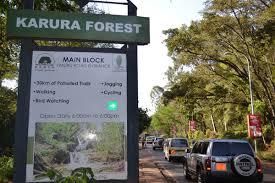
Karura Forest is a large, protected urban forest in Nairobi, Kenya, crucial for biodiversity and recreation, offering trails for walking/cycling, waterfalls, caves, and wildlife like monkeys, duikers, and numerous bird species, managed by Kenya Forest Service (KFS) and Friends of Karura Association (KFS) and Friends of Karura Association and famous for its successful conservation against development threats, spearheaded by Wangari Maathai.
Karura Forest is 1,041 hectares (2,570 acres) consisting of three parts separated by Limuru and Kiambu roads. The large middle portion is ca. 710 hectares (1,800 acres); the Sigiria salient to the west is ca. 250 hectares (620 acres). The portion to the east of Kiambu road has been allocated to special national priorities. As of mid-2016, 36% of the forest contains indigenous upland forest tree species. The forest is home to some 200 species of bird as well as suni, Harveys Duiker, bushbucks, bush pigs, genets, civets, honey badgers, bush babies, porcupines, Syke’s monkeys, bush squirrels, hares, fruit bats, and various reptiles and butterflies. Karura now has over 50 km of trails for visitors to walk, run or bike.
Due to its proximity to a growing city, there have been plans to reduce the forest in favour of housing and other development. However, these plans have been controversial with conservationists. In the late 1990s there were housing projects that would have excised portions of the forest. Conservationists, led by Wangari Maathai, the leader of Green Belt Movement who later became a Nobel Peace Prize Laureate, carried out a much publicized campaign for saving the forest. Karura Forest became also a symbol against controversial land grabbings in Kenya.
Karura Forest is located north of central Nairobi and is bordered by the suburbs of Muthaiga, Gigiri, Runda, Ridgeways, Mathare North, Peponi and New Muthaiga. The western part of the forest is also known as Sigiria Forest. The area north of central Nairobi forms a drainage basin and was once heavily forested, but exists today only as patches like Karura Forest and City Park. The forest is cut by Thigirie, Getathuru, Rui Ruaka and Karura Rivers, all tributaries of Nairobi River.
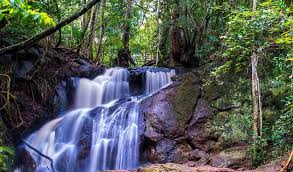
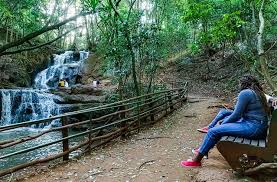
There are a waterfall, bamboo forest, marshland, Mau Mau caves and an old church in the forest.
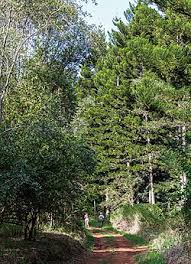
Karura Forest is now developed as a visitor’s attraction for both local and international, with more than 16,000 entries per month. This includes creation of some 50 km of nature trails for walking, running and biking. The first trail, which is four kilometres long and connects Limuru Road with Old Kiambu Road was opened in May 2009. An electric fence has been built around the forest for security reasons. Although 70% of Karura’s visitors are Kenyan citizens, there is a growing appreciation by an international clientele as witnessed by Karura having received a TripAdvisor Certificate of Excellence for two years running (2014–15) and being listed as No. 4 out of 101 Things To Do in Nairobi.
Visitors to Nairobi’s Karura Forest love cycling scenic trails, discovering hidden spots like the Karura Waterfall, exploring historical Mau Mau Caves, enjoying picnics by Lily Lake, birdwatching, and even planting trees, experiencing a peaceful escape with activities ranging from guided nature walks to solo biking adventures
Key Fun Experiences:
- Cycling & Walking: Miles of well-maintained trails, including the Bamboo Trail, offer great opportunities for self-guided rides or hikes, with bike rentals available.
- Waterfall Wonders: Finding the beautiful Karura Waterfall and listening to the birdsong is a highlight for many.
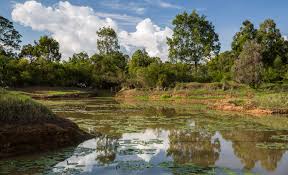
- Picnics & Relaxation: Designated picnic sites, especially around the picturesque Lily Lake (a former quarry), are perfect for families and friends.
- History & Culture: Exploring the historical Mau Mau Caves, used by freedom fighters, provides a fascinating glimpse into Kenya’s past.
- Kids’ Corner: A dedicated area with slides and swimming makes it fun for younger visitors.
- Tree Planting: A unique activity where you can plant a tree, track it with GPS, and help with reforestation efforts.
- Birdwatching: The diverse flora attracts numerous bird species, making it a great spot for nature enthusiasts.
- Forest Café: A chance to relax and grab refreshments after exploring.
Why People Love the Karuna Forest?
Urban Oasis: It’s a peaceful green escape within busy Nairobi.
Safety: Many solo visitors, including women, report feeling safe while walking and running.
Variety of Activities: From adventure to relaxation, there’s something for everyone
The Karura Forest Environmental Education Trust (KFEET) was formed in 2010, and launched by then Minister for Forestry and Wildlife Noah Wekesa. KFEET manages an environmental education centre located in Karura Forest and facilitating access to thousands of Kenyan school children.
Are you planning your nest trip to Africa? Then you should add the Karuna Forest to your bucket list.
Additional Sources: Wikipedia, Trip Advisor