

Musician, Performer, Founder and King of Afrobeat, Political Activist and Voice for the People
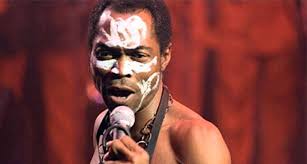
Fela Kuti was popularly described as the “Black President”, a title he gave himself, representing his role as a voice for the people against political corruption and oppression. He was also widely known as the “Abami Eda”, a Yoruba phrase meaning “the strange one” or “mystical wanderer,” highlighting his unconventional lifestyle and artistic genius.
He was celebrated as the pioneer or king of Afrobeat, a music genre he created by combining traditional Yoruba music, jazz, highlife, and funk.
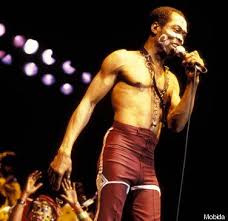
Some people knew Fela as, A Political Maverick/Activist where he used his music as a weapon against Nigeria’s military regimes. Others knew him as a Charismatic Performer often described as one of Africa’s most challenging and charismatic performers, who created a unique “Afrobeat spirituality”. Most however, acknowledged him as ‘The Voice of the People’. He was seen as a leader for the oppressed masses. He set up a communal compound, which he proclaimed the independent Kalakuta Republic
Fela Aníkúlápó Kútì born ‘Olufela Olusegun Oludotun Ransome-Kuti’ was a Nigerian musician and political activist. He is regarded as the principal innovator of Afrobeat, a Nigerian music genre that combines West African music with American funk and jazz. At the height of his popularity, he was referred to as one of Africa’s most “challenging and charismatic music performers”. AllMusic described him as “a musical and sociopolitical voice” of international significance.
Fela married 27 women simultaneously in 1978. His senior wife was Remilekun Taylor.
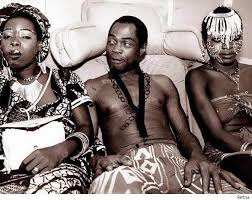
Fela’s Birth
Fela was the son of Nigerian women’s rights activist Funmilayo Ransome-Kuti. After early experiences abroad, he and his band Africa ’70 (featuring drummer and musical director Tony Allen) shot to stardom in Nigeria during the 1970s, during which Kuti was an outspoken critic and target of Nigeria’s military juntas. In 1970, he founded the Kalakuta Republic commune, which declared itself independent from military rule. The commune was destroyed in a 1977 army raid that injured Fela and killed his mother. He was jailed by the government of Muhammadu Buhari in 1984, but released after 20 months. Fela continued to record and perform through the 1980s and 1990s. Since his death in 1997, reissues and compilations of his music have been overseen by his son, Femi Kuti.
In 2026, Fela was posthumously inducted into the Rock and Roll Hall of Fame as an early/musical influence after two previous nominations.
Fela was born into the Ransome-Kuti family, an upper-middle-class family, on 15 October 1938, in Abeokuta, Colonial Nigeria. His mother, Funmilayo Ransome-Kuti, was an anti-colonial feminist, and his father, Israel Oludotun Ransome-Kuti was an Anglican minister, school principal, and the first president of the Nigeria Union of Teachers. Fela’s parents both played active roles in the anti-colonial movement in Nigeria, most notably the Abeokuta Women’s Riots which were led by his mother in 1946. His brothers Beko Ransome-Kuti and Olikoye Ransome-Kuti, both medical doctors, were well known nationally. Fela is a cousin to the writer and fellow activist Wole Soyinka, a Nobel Prize for Literature winner. They are both descendants of Josiah Ransome-Kuti, an Anglican clergyman and musical pioneer, who is Kuti’s paternal grandfather and Soyinka’s maternal great-grandfather.
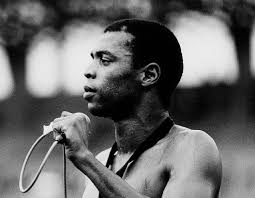
Fela’s Schooling
Fela attended Abeokuta Grammar School. In 1958, he was invited to London by his younger brother Beko (a medical student at the time), to study music at the Trinity College of Music, with the trumpet being his preferred instrument. While there, he formed the band Koola Lobitos and played a fusion of jazz and highlife. The ensemble would include as members Bayo Martins on drums and Wole Bucknor on piano. In 1960, Fela married his first wife, Remilekun (Remi) Taylor with whom he had three children (Yeni, Femi, and Sola). In 1963, Kuti moved back to the newly independent Federation of Nigeria, re-formed Koola Lobitos, and trained as a radio producer for the Nigerian Broadcasting Corporation. He played for some time with Victor Olaiya and his All-Stars.
He called his style Afrobeat, a combination of Apala, funk, jazz, highlife, salsa, calypso and traditional Yoruba music. In 1969, Kuti took the band to the United States and spent ten months in Los Angeles. While there, he discovered the Black Power movement through Sandra Smith (now known as Sandra Izsadore or Sandra Akanke Isidore), a partisan of the Black Panther Party. This experience heavily influenced his music and political views. He renamed the band Nigeria 70. Soon after, the Immigration and Naturalization Service was tipped off by a promoter that Kuti and his band were in the US without work permits. The band performed a quick recording session in Los Angeles that would later be released as The ’69 Los Angeles Sessions.
Fela’s Band, The Kalakuta Republic and more
After Fela and his band returned to Nigeria, the group was renamed (the) Africa ’70 as lyrical themes changed from love to social issues. He formed the Kalakuta Republic—a commune, recording studio, and home for many people connected to the band—which he later declared independent from the Nigerian state.
Fela set up a nightclub in the Empire Hotel. First named the Afro-Spot and later the Afrika Shrine, this was where he performed regularly and officiated at personalized Yoruba traditional ceremonies in honor of his native ancestral faith. He also changed his name to Anikulapo (meaning “He who carries death in his pouch”, with the interpretation: “I will be the master of my own destiny and will decide when it is time for death to take me”). He stopped using the hyphenated surname “Ransome” because he considered it to be a slave name.
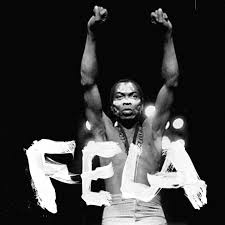
Fela’s music was popular among the Nigerian public and Africans in general. He decided to sing in Pidgin English (popularly called ‘Vernacular’) so that individuals all over Africa could enjoy his music, where the local languages they speak are diverse and numerous. As popular as Fela’s music had become in Nigeria and elsewhere, it was unpopular with the government, and raids on the Kalakuta Republic were frequent. During 1972, Ginger Baker recorded Stratavarious, with Kuti appearing alongside vocalist and guitarist Bobby Tench. Around this time, Kuti became even more involved with the Yoruba traditional religion.
In 1977, Fela and Africa 70 released the album Zombie, which heavily criticized Nigerian soldiers, and used the zombie metaphor to describe the Nigerian military’s methods. The album was a massive success and infuriated the government, who raided the Kalakuta Republic with 1,000 soldiers. During the raid, Fela was severely beaten, and his elderly mother (who had contributed to the movement for Nigeria’s Independence) was fatally injured after being thrown from a window. The commune was burnt down, and Kuti’s studio, instruments, and master tapes were destroyed. Kuti claimed that he would have been killed had it not been for a commanding officer’s intervention as he was being beaten. Fela’s response to the attack was to deliver his mother’s coffin to the Dodan Barracks in Lagos, General Olusegun Obasanjo’s official residence, and to write two songs, “Coffin for Head of State” and “Unknown Soldier,” referencing the official inquiry that claimed an unknown soldier had destroyed the commune.
Fela, His Marriage and Wives
Fela and his band took up residence in Crossroads Hotel after the Shrine had been destroyed along with the commune. In 1978, he married 27 women, many of whom were dancers, composers, and singers with whom he worked. The marriages served not only to mark the anniversary of the attack on the Kalakuta Republic but also to protect Fela and his wives from the authorities’ false claims that Fela was kidnapping women. Later, he adopted a rotation system of maintaining 12 simultaneous wives. There were also two concerts in the year: the first was in Accra, in which rioting broke out during the song “Zombie”, which caused Kuti to be banned from entering Ghana; the second was after the Berlin Jazz Festival, when most of Fela’s musicians deserted him due to rumours that he planned to use all of the proceeds to fund his presidential campaign.
Other reports suggested that, being disappointed by their fees, band leader Tony Allen and almost all of the musicians resigned. Baryton player, Lekan Animashaun became band leader following this, and Fela created a new group named Egypt 80. In 1979, Fela formed his political party, which he called Movement of the People (MOP), to “clean up society like a mop”, but it quickly became inactive due to his confrontations with the government of the day. MOP preached Nkrumahism and Africanism.
Two of Kuti’s sons are musicians: Femi and Seun.
In 1980, Fela signed an exclusive management deal with French producer Martin Meissonnier, who secured a record deal with Arista Records London through A&R Tarquin Gotch. The first album came out in February 1981 under the title of Black President, with the track “ITT” and on the B-Side “Colonial Mentality” and an edited version of “Sorrow, Tears and Blood” (these two tracks recorded with Africa 70 and Tony Allen were unreleased in Europe). Following the release, Fela performed his first European tour (four concerts in a week) with a suite of 70 people. The tour, starting in Paris on 15 March 1981, had a huge crowd estimated at 10,000 people attending, then Brussels, Wien and Strasbourg. Black President was followed by another album that was recorded in Paris in July 1981: Original Suffer head, with “Power Show” on the B-side. Kuti also recorded the track “Perambulator” in Paris. Arista gave his masters to Fela at the end of 1981. French Filmmaker Jean Jacques Flori came to Lagos in early 1982 to direct the now classic film “Music is a Weapon”. The film was broadcast first on Antenne 2 (French TV in 1982). The film producer Stephane Tchalgaldjieff didn’t like the resulting film, and decided to re-edit it for an international release. “V.I.P. (Vagabonds in Power)” and “Authority Stealing” were released in 1980, with the former being a live performance done in Berlin, West Germany.
Fela’s Presidential Ambition
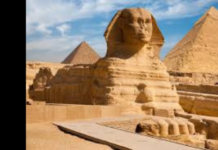
In 1983, Fela nominated himself for president in Nigeria’s first elections in decades, but his candidature was refused. At this time, Fela recreated his band, Egypt 80, which reflected the view that Egyptian civilization, knowledge, philosophy, mathematics, and religious systems are African and must be claimed as such. Kuti stated in an interview: “Stressing the point that I have to make Africans aware of the fact that Egyptian civilization belongs to the African. So that was the reason why I changed the name of my band to Egypt 80.” Fela continued to record albums and tour the country. He further infuriated the political establishment by implicating ITT Corporation’s vice-president, Moshood Abiola (M.K.O), and Obasanjo in the popular 25-minute political screed entitled “I.T.T. (International Thief-Thief)”.
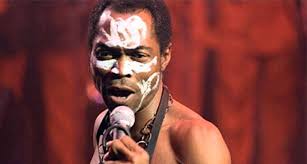
In 1984, Muhammadu Buhari’s government, of which Kuti was a vocal opponent, jailed him on a charge of currency smuggling. Amnesty International and others denounced the charges as politically motivated. Amnesty designated him a prisoner of conscience, and other human rights groups also took up his case. After 20 months, General Ibrahim Babangida released him from prison. On his release, Kuti divorced his 12 remaining wives, citing “marriage brings jealousy and selfishness” since his wives would regularly compete for superiority.
Stay tuned for the continuation of this African Hero Series on Fela Anikulapo Kuti…