




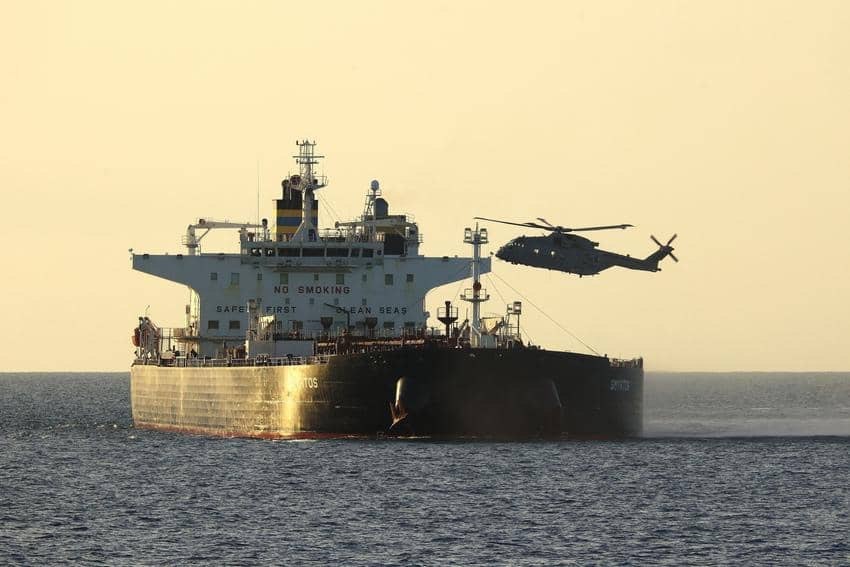
A British maritime operations in the English Channel has done more than intercept a tanker. It has pulled the Cameroon flag into the centre of a widening debate about how global sanctions are quietly being circumvented on the high seas.
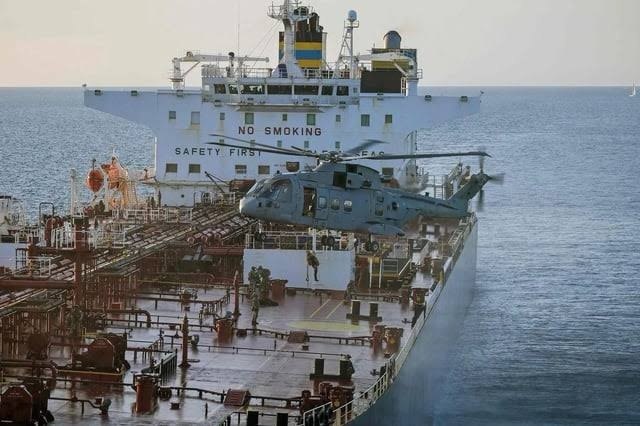
The vessel, the Smyrtos, was boarded in the early hours of Sunday 14 June 2026 by Royal Marines and officers from the UK’s National Crime Agency. It is now detained off southern England as investigators probe its ownership, cargo and routing history. British officials say the tanker forms part of Russia’s so-called shadow fleet, a sprawling maritime network used to move oil outside Western sanctions imposed over the war in Ukraine. The UK described the seizure as a disruption of that network, while Ukraine welcomed it as part of broader pressure on Russian oil revenues.
But the real story is not only the interception. It is the flag. The Smyrtos is the second Cameroon-flagged tanker intercepted in less than two weeks and linked to suspected sanctions-evasion activity in European waters. That repetition is what is now raising uncomfortable questions in maritime circles. Why Cameroon?
The answer, according to maritime analysts and shipping data specialists, lies less in geopolitics and more in the architecture of global shipping itself. The Cameroon registry sits within a wider ecosystem of so-called flags of convenience. These are systems that allow ship-owners to register vessels outside the countries where they are owned, operated, or financed. In theory, this is legal maritime flexibility. In practice, it often creates a jurisdictional fog.
Within that fog, accountability becomes thinner. Registration can be fast. Ownership disclosure can be minimal. Oversight after registration is often limited, especially for vessels operating far from the flag state’s territorial waters. For commercial operators, this is efficiency. For regulators tracking sanctioned oil flows, it is a blind spot.
That is why flags like Cameroon’s have become increasingly visible in the shadow fleet ecosystem. They are not necessarily central to the trade, but they are useful. A tanker can be reflagged quickly, rerouted through multiple jurisdictions, and inserted into complex chains of intermediaries that make enforcement harder at every step. In a sanctions environment that depends heavily on tracing ownership and cargo origin, the flag becomes part of the concealment strategy.
This is where the Smyrtos matters beyond its own voyage. Its Cameroon registration is not an isolated detail. It is part of a pattern that enforcement agencies are beginning to recognize. The concern is not that Cameroon is directing these movements, but that its registry, like others with lighter regulatory structures, is being used as infrastructure in a parallel oil economy designed to bypass sanctions.
There are signs that even flag states are beginning to react under pressure. Maritime sources suggest Cameroon has recently removed a number of vessels suspected of shadow fleet activity from its register, sometimes in proximity to enforcement actions abroad. That pattern points to a system under strain: not fully controlling the vessels it flags, but responding after risk becomes visible.
Yet the absence of a clear public response to the Smyrtos case leaves a gap that others quickly fill with interpretation. And in that gap, perception hardens into narrative. Certain flags are becoming enablers (intentionally or not) of sanction evasion.
For now, the ship remains detained, and the investigation continues. But the broader question is already moving beyond a single vessel. It is about how the modern maritime system, designed for flexibility and global trade, is being repurposed in moments of geopolitical confrontation; and how flags like Cameroon’s are ending up at the center of that transformation without necessarily being in control of it.
By: Ntaryike Divine Jr