

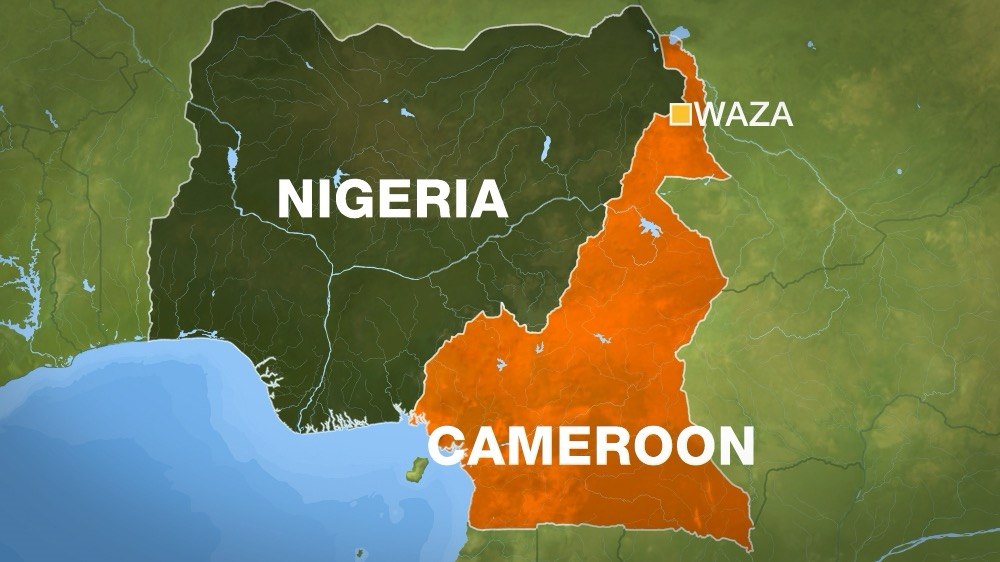
Fresh concerns have emerged over the security of Nigeria’s eastern frontier after the country’s army revealed that Cameroonian troops crossed into Danare Community in the Cross River State earlier this week before withdrawing following military intervention.
The incident has renewed attention on unresolved sections of the Nigeria-Cameroon boundary nearly two decades after the controversial handover of the Bakassi Peninsula to Cameroon. In a statement issued Thursday in Enugu, Nigeria’s Acting Deputy Director of Army Public Relations, Lt.-Col. Olabisi Ayeni, said troops stationed in Danare responded after reports of the presence of foreign soldiers in the border community. According to Ayeni, Nigerian troops immediately contacted the appropriate Cameroonian military authorities, leading to the withdrawal of the soldiers in line with established border protocols.
“Troops of the Nigerian Army deployed at the Forward Operating Base Danare, upon receiving reports of foreign military presence, promptly responded and contacted appropriate Cameroonian Armed Forces authority. This led to the withdrawal of Cameroonian troops from Nigerian territory in line with established border protocols,” he said. He added that preliminary findings indicated that the incident stemmed from a dispute over the collection of levies on farmland located between Danare Community in Nigeria and Dadi Community in Cameroon.
He added that the General Officer Commanding the 82 Division had directed the Commander of the 13 Brigade to engage with his Cameroonian counterpart to prevent a recurrence.
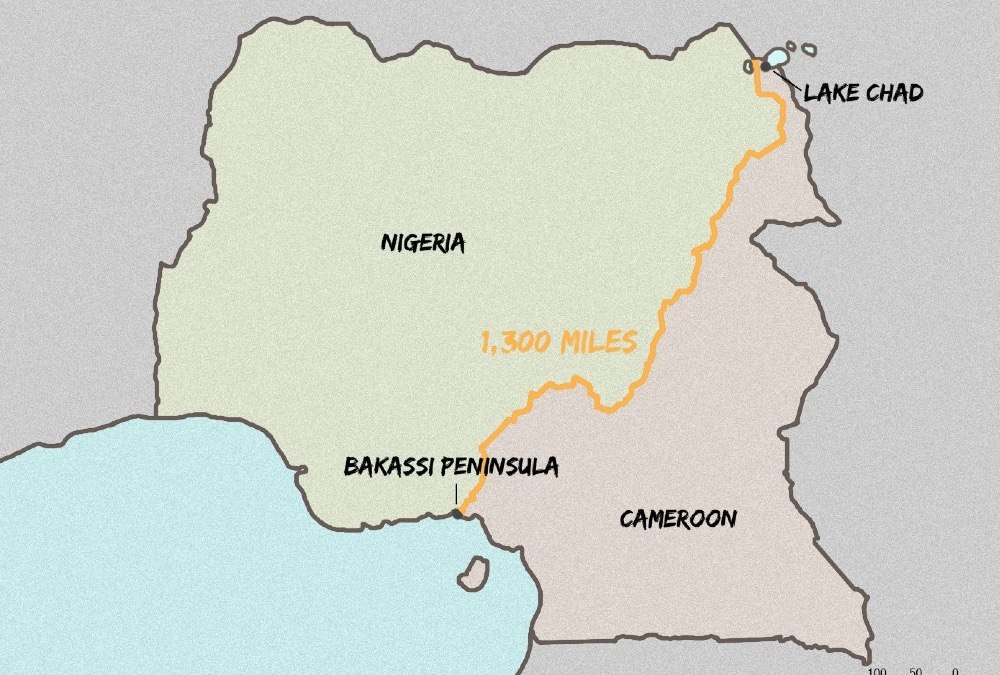
Although the latest standoff ended without casualties, it has once again exposed the vulnerabilities along the more than 2,000-kilometre border shared by both countries, parts of which remain incompletely demarcated.
The border demarcation process began after the 2002 ruling of the International Court of Justice, which awarded sovereignty over the oil-rich Bakassi Peninsula to Cameroon. Nigeria formally transferred Bakassi to Cameroon in 2008 under the United Nations-backed Green Tree Agreement, a decision that sparked widespread debate at home.
The Cameroon-Nigeria Mixed Commission was subsequently established to oversee the demarcation of the entire land and maritime boundary. However, the process remains unfinished, leaving room for periodic disputes involving border communities.
The Danare incident is the latest reminder of a relationship shaped by both cooperation and unresolved tensions. Border clashes between Nigerian and Cameroonian forces in 1981 reportedly claimed the lives of several Nigerian soldiers, while the Bakassi crisis of the 1990s pushed both countries dangerously close to open conflict before international arbitration intervened.
Ayeni said the Nigerian Army remained committed to defending Nigeria’s territorial integrity and ensuring the safety of border communities. “Residents of Danare and adjoining areas are reassured that the situation is calm and fully under control,” he said. “Troops remain vigilant and will continue to monitor border activities.” He urged residents to remain calm, go about their lawful activities and refrain from spreading unverified information capable of heightening tensions.
For communities straddling the Nigeria-Cameroon border, however, the latest incursion underscores a lingering reality: until the remaining stretches of the frontier are conclusively settled, old disputes could continue to ignite new anxieties.
By: Ntaryike Divine Jr