





By The African Digest (Editorial Team)
The upcoming Special May 2026 Edition of The African Digest Magazine (Print and Digital) in the Edition to be released next week features a detailed story on ‘Yasuke’ – the first Real African Samurai. Here are some sneak peeks into the Magazine features…
For those of us who are fans of Chinese or Japanese films and movies, the word ‘samurai’ may not be new to us. However, there are probably some Africans who do not share similar interest or may not be such enthusiasts.
The Samurai were the hereditary, elite warrior class of pre-modern Japan, serving as armed retainers to daimyo (feudal lords) and the shogun from the 10th century until their abolition in 1876. Known as “those who serve,” they followed a strict ethical code, Bushido (the way of the warrior), which emphasized loyalty, mastery of martial arts (especially the katana sword), and honor, even unto death.
Yasuke was a 16th-century African man who became the first recorded foreign-born samurai in Japanese history. He served the powerful feudal lord Oda Nobunaga between 1581 and 1582 during the Sengoku period.
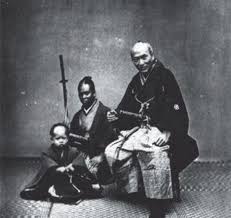
Yasuke arrived in Japan in 1579 with Jesuit missionaries and became a trusted retainer and sword-bearer for the powerful warlord Oda Nobunaga in 1581. Yasuke arrived in Kyoto where he found himself at the feet of the Feudal Lord Oda Nobunaga, who praised his height and build.
But who exactly was Yasuke ?
While his exact birthplace is unknown, it is believed Yasuke came from Portuguese Mozambique, Ethiopia, or Nigeria or somewhere in Africa, arriving in Japan in 1579 with Jesuit missionary Alessandro Valignano. It is said, his arrival in Kyoto caused a sensation, as he was a man of “charcoal” skin and towering stature (roughly 6 feet 2 inches or 1.88m), standing well over the average Japanese height of that time. He adopted the name ‘Yasuke’ only after arriving in Japan with the Jesuit missionary Alessandro Valignano.
Yasuke’s arrival in Kyoto caused a massive, chaotic spectacle due to his skin color, which Nobunaga and many others initially believed had been painted on – as in a tattoo or fancy skin painting.
It had been the first time he had seen an African.
Upon their meeting, Nobunaga famously scrutinized Yasuke’s skin, initially believing it to be painted black. Convinced this was the case, Nobunaga ordered him to bathe.
Despite this unusual introduction, Yasuke quickly impressed Nobunaga, having already picked up some Japanese. Nobunaga soon transferred him from Jesuit service into his own, honoring him with a house, money, servants, and even the new name, Yasuke. According to Jesuit chronicler Luís Fróis, many assumed Nobunaga would continue to lavish honors on Yasuke and elevate him to a lord.
Yasuke however, served as a trusted bodyguard and accompanied Nobunaga in battle, including fighting at the Honnō-ji, where Nobunaga was betrayed and killed. Impressed by his strength and presence, Nobunaga took him into service, gave him the name “Yasuke,” and granted him the status of a warrior (samurai). He was allowed to bear arms, a privilege reserved for the warrior class.
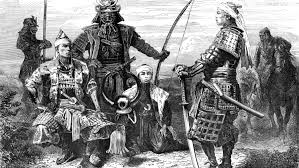
Yasuke served as a bodyguard, learned Japanese, and was known for his strength, described as having the power of 10 men. He was considered a trusted companion by Nobunaga.
Watch out for the upcoming version of our Magazine to read the full story on ‘Yasuke’ – the African Samurai.