





By Daniel Kontie – Executive Chairman, Africa Continental Engineering & Construction Network Ltd (ACECNL)
…. Continued from previous post [Part 1 A]
This is the continuation and completion of this series. Watch out for the Part 2 Series here on our website.
Now the continuation…..
Buying from Developers: The Illusion of Structured Security
The rise of gated communities and private developers has introduced a perception of professionalism and reduced risk. However, buyers often overlook critical issues such as underlying land title validity, development permits and existing financial encumbrances. In some cases, lands used for development are already mortgaged, creating competing interests between financial institutions and individual buyers.
The International Finance Corporation notes that weak regulatory enforcement in emerging real estate markets can expose buyers to hidden liabilities, even within formally structured developments.
Stool Land Complexity: When Customary Authority Becomes Uncertain
A significant portion of land in Ghana is held under customary tenure, administered by stools, skins and family heads. While this system is legally recognized, overlapping authority and internal disputes can create uncertainty regarding who has the legitimate power to allocate land.
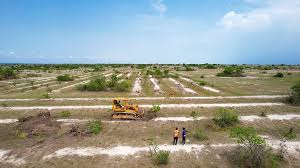
The Ghana Statistical Service and related land governance studies have highlighted the complexities of customary land administration, particularly in urban areas where land values are rapidly increasing and competing claims intensify.
Survey Plan Manipulation: Technical Errors with Legal Consequences
Survey plans are critical to defining property boundaries, yet they are not immune to manipulation. Altered coordinates, overlapping plots and inaccurate demarcations can result in encroachment disputes that may not surface until development begins. According to guidance from the Ghana Institution of Surveyors, proper verification and validation of survey data are essential, yet often neglected by buyers who lack technical expertise.
The Hidden Cost Trap: When Affordable Land Becomes Expensive
Low land prices in unplanned or peri-urban areas often conceal significant future costs. Buyers may be required to invest heavily in infrastructure such as roads, drainage, water and electricity before the land becomes usable. Research by the African Development Bank indicates that inadequate urban planning and infrastructure deficits significantly increase the total cost of land ownership in many African cities, including Accra.
Land Guards and Security Risks: Ownership without Possession
Legal ownership does not always translate into physical control. The presence of land guards and informal enforcement mechanisms reflects deeper governance challenges within the land sector. In some cases, buyers must incur additional costs to secure and maintain possession of their property. The United Nations Office on Drugs and Crime has linked such practices to broader issues of weak rule of law and informal power structures in land management.
Registration Delays: The Risk of Unperfected Interests
Property registration in Ghana can be a lengthy process, during which buyers remain vulnerable to competing claims. Until registration is completed, legal protection is limited and interests may be challenged. The World Bank has consistently identified delays in property registration as a key barrier to secure land tenure and investment in developing economies and Ghana is not an exception.
Resale Illusion: The Challenge of Market Exit
Contrary to popular belief, not all property investments in Ghana are easily liquidated. Factors such as location, infrastructure and market demand significantly affect resale potential. Many properties remain unsold for extended periods, trapping investors in illiquid assets. Market analyses by the Bank of Ghana and related institutions point to structural inefficiencies and demand-supply mismatches within the real estate sector.
The Systemic Nature of Risk in Ghana’s Property Market
In conclusion, the red flags outlined above are not isolated anomalies but interconnected elements of a broader systemic challenge. Ghana’s property market operates at the intersection of formal legal frameworks and informal customary practices, creating a hybrid system that can be difficult for buyers to navigate.

As this series will demonstrate in detail, effective due diligence requires more than documentation or institutional checks, it demands a deep understanding of the structural realities that shape property ownership and transfer. Ultimately, the greatest risk is not simply fraud or error, but misplaced confidence in systems that are still evolving.
Buyers who approach the market with incomplete knowledge may unknowingly expose themselves to avoidable losses. The subsequent parts of this series will unpack each of these red flags in depth, offering critical insights into how they operate and how they can be mitigated.
Now, a Guide to Starting the Process
Now, the multi-million dollar question is, how will the individual be able to put together all these pieces of relevant information or the professionals needed to conduct a comprehensive due diligence whilst saving time and cutting cost. A prudent property acquisition process must begin with the engagement of a reputable real estate consultant or a real estate legal practitioner who serves as the central coordinator of all pre-purchase and transaction requirements.
This takes away from the buyer, the burden of having to source individually, surveyors, legal practitioners, planners and other professionals relevant to the process. The consultant synchronizes these services, ensuring that the due diligence is properly sequenced, verified and professionally conducted.
This coordinated approach significantly reduces risk; curtail cost overruns and procedural errors, while providing the buyer with clarity and confidence throughout the process.
This is where the expertise of the Africa Continental Engineering & Construction Network Ltd comes into play, we are your credible first point of call, offering buyers a structured, professionally guided entry into the property market in Ghana, anchored in strict due diligence, regulatory compliance and integrated industry expertise.
Stay tuned, and follow through all the parts of this all-important series and I can assure you, you will have no regrets. See you in part-2.
References
World Bank. (2020–2024). Land Governance and Property Rights Reports; Doing Business Registering Property Indicators. https://www.worldbank.org/en/programs/land-governance
United Nations Human Settlements Programme (UN-Habitat). (2012–2022). Land and Conflict Resolution Frameworks; Urban Land Markets Studies https://unhabitat.org/topic/land
Food and Agriculture Organization. (2012). Voluntary Guidelines on the Responsible Governance of Tenure (VGGT) https://www.fao.org/tenure/voluntary-guidelines/en
International Finance Corporation. (2019–2023). Real Estate Market and Housing Sector Reports in Emerging Economies https://www.ifc.org/en/insights-reports/housing
African Development Bank. (2018–2023). Urban Infrastructure and Land Use in Africa Reports. https://www.afdb.org/en/topics-and-sectors/sectors/urban-development
United Nations Office on Drugs and Crime. (2017–2021). Corruption and Land Administration Studies https://www.unodc.org/unodc/en/corruption
Ghana Lands Commission. Guidelines on Land Title Registration and Documentation Procedures https://landscommission.gov.gh
Ghana Institution of Surveyors. Standards and Practice Notes on Surveying and Mapping. https://ghisonline.org
Ghana Statistical Service. Land Use and Urbanization Reports https://statsghana.gov.gh
Bank of Ghana. Financial Stability and Real Estate Sector Reports. https://www.bog.gov.gh
About Author

Daniel Kontie is a young enthusiastic Ghanaian Entrepreneur, the Executive Chairman of the Africa Infrastructure Group; comprising the Africa Continental Engineering & Construction Network Ltd (ACECN), Falcon 48 Developers; Africa Infrastructure Energy and Africa Land Banking Investment Ltd. All these are infant establishments, disrupting the conventional way of brand building across the African Continent. Daniel is a columnist, a writer and a member of the Ghana Built Environment Writers Association. He can be contacted via Tel: +233209032280; Email: d.kontie@acecnltd.com; Website: https://acecnltd.com/