



An extraordinary government purge has shaken Equatorial Guinea after a high-level performance review concluded that ministries had delivered barely a tenth of the targets assigned to them. The finding triggered the collective resignation of the country’s entire cabinet, exposing growing frustration at the highest levels of government over what officials described as a failure to convert public resources into meaningful results for citizens.
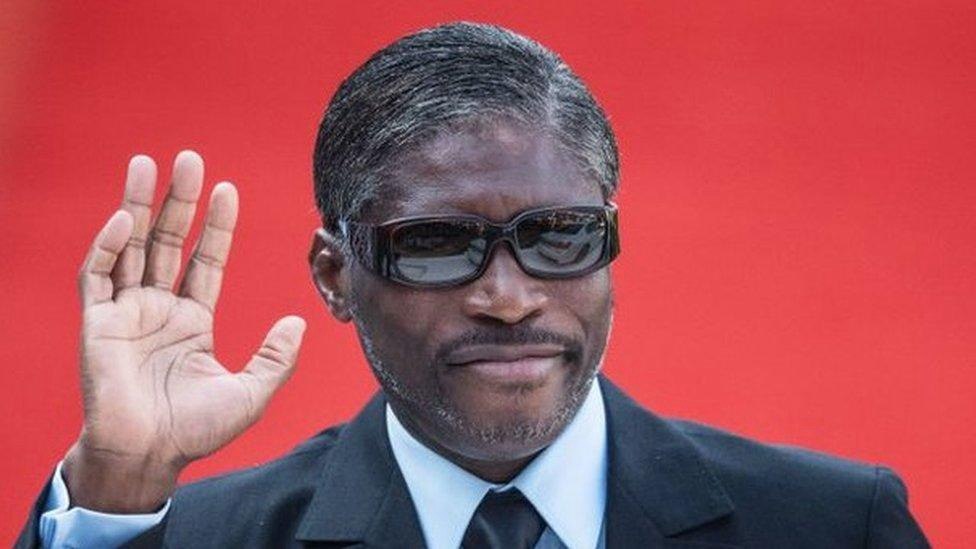
The move was announced Wednesday, June 17, by Vice President Teodoro Obiang Nguema Mangue, who revealed that Prime Minister Manuel Osa Nsue Nsua had presented the resignation of all ministers to President Teodoro Obiang Nguema Mbasogo during an emergency cabinet session.
The decision is one of the most dramatic political shake-ups in the oil-producing Central African nation in recent memory.
At the heart of the upheaval lies a stark statistic: government departments reportedly met only 10 percent of the objectives assigned to them. For the country’s leadership, the figure represented more than bureaucratic underachievement. It was seen as evidence of a widening gap between state spending and tangible improvements in the daily lives of ordinary citizens.

“The confidence placed in members of the executive must be matched by efficiency, discipline, accountability and results,” the vice president said, calling for a public administration capable of delivering measurable outcomes rather than promises. The cabinet’s downfall comes as Equatorial Guinea confronts mounting economic headwinds.
Long buoyed by vast oil and gas reserves, the country was once among Africa’s fastest-growing economies. Revenues from offshore hydrocarbons transformed the small nation into an upper-middle-income economy and financed major infrastructure projects. But the boom years have faded.
Declining oil production has steadily eroded government revenues, exposing the vulnerabilities of an economy heavily dependent on hydrocarbons. As production falls, growth has slowed, investment has weakened and pressure has intensified on public finances.
The consequences are increasingly visible. While average income levels remain relatively high by regional standards, much of the population continues to struggle with limited access to essential services. Poverty remains widespread, unemployment persists and many communities still lack reliable electricity and running water.
Economic projections suggest further turbulence ahead. After a brief period of modest recovery, the economy is expected to shrink again in 2025, with additional contractions forecast over the following two years as oil output continues its decline. Faced with this reality, authorities are attempting to accelerate a long-promised economic transformation.
Under its Agenda 2035 development blueprint, the government hopes to reduce reliance on petroleum by investing in emerging sectors ranging from the blue and green economies to digital industries and tourism. The strategy is intended to create new sources of growth and employment while broadening the country’s economic base.
Yet officials and international partners alike acknowledge that ambitious plans alone will not be enough. The World Bank has repeatedly stressed that stronger institutions, improved governance and effective policy implementation will determine whether diversification efforts succeed. Without those reforms, analysts warn, economic gains may continue to bypass large segments of the population.
For Prime Minister Manuel Osa Nsue Nsua, a former banking executive brought into office in August 2024 to drive reforms, the mass resignation represents a defining moment. It signals both the scale of the government’s dissatisfaction with current performance and the urgency of delivering results amid a deteriorating economic landscape.
The coming cabinet reshuffle will now be closely watched, not only as a political exercise but as a test of whether Equatorial Guinea can build a more effective state apparatus at a time when dwindling oil wealth is leaving little room for complacency. For a government under pressure to prove it can deliver, the message from the presidency appears unmistakable: performance, not position, will determine who remains at the table.
By Ntaryike Divine Jr.