





By Daniel Kontie – CEO, African Continental Engineering and Construction Network ACECN
Key Trends, Opportunities and Forecasts (Part 1)
As we bring the year to a close with this final edition on The Construction and Real Estate Digest, we extend our profound appreciation to our esteemed readers, industry practitioners and valued stakeholders for their unwavering support and engagement throughout the year. Your loyalty and thoughtful feedback have continually enriched this column and reinforced its purpose as a trusted platform for informed analysis and industry discourse.
Looking ahead to the New Year 2026, we remain committed to delivering deeper insights, forward-thinking perspectives and practical commentary that will support decision-making and sustainable growth within Ghana’s construction and real estate sectors. We thank you for being part of this journey and look forward to your continued readership in the years ahead.
This last edition cuts through speculation to examine the key economic and policy forces set to define the real estate market outlook, the opportunities and challenges that lie in 2026 and beyond.
Ghana’s real estate market entered 2025 at a critical inflection point. Following a period of macroeconomic instability marked by high inflation, currency depreciation and elevated interest rates; recent economic indicators in the last quarter suggest a significant recovery.
With falling inflation, easing monetary policy, lower interests and renewed investor confidence, a significant broad base growth is expected across residential, commercial and mixed-use property segments in 2026. We shall be looking at the impact of the macroeconomic turn around on the market, the housing demand and supply trends, the impact of construction costs, the impact of the government’s No Academic Fees for First Year University students dubbed, the No-Fee-Stress initiative , the market opportunity predictions and conclude with anticipated market risks and challenges.
Ghana’s Real Estate performance
Ghana’s economy recorded a notable rebound in 2025, with real GDP growth accelerating to approximately 5.5 percent in the third quarter, reflecting improved performance in industry, services, and construction-related activities (Ghana Statistical Service, 2025); (Reuters, 2025b).
In response to declining inflationary pressures, the Bank of Ghana implemented successive reductions in the monetary policy rate, signaling a shift from stabilization to recovery-oriented policy (Bank of Ghana, 2025). These lower policy rates, if transmitted effectively through the banking system, are expected to reduce borrowing costs for developers and improve mortgage affordability for households in 2026.
The implication of this stable macroeconomic environment is that, it will most likely stimulate transaction volumes, unlock stalled developments and restore confidence among domestic and diaspora investors, particularly in urban markets such as Accra.
Housing Demand and Supply Imbalance
According to (Centre for Affordable Housing Finance in Africa, 2024), Ghana still faces over a million unit housing shortfall whilst the World Bank (World Bank, 2023) point to a chronic under-supply of social housing units as against a relative oversupply of luxury stock.
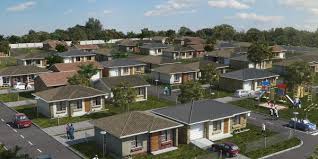
This situation is exacerbated by the persistent and rapid urbanization; population growth and rural-urban drift. This phenomenon will continue to fuel housing demand, especially within the Greater Accra Metropolitan Area going into 2026 and beyond.
What this means is that, this trend is most likely to persistent throughout 2026 as developers are still focused on developing more high-end properties whilst neglecting social housing and mid-end properties in high demand by the populace.
Against this backdrop, demand pressure will remain strongest in 2026 for affordable and mid-end housing, presenting the most compelling long-term opportunity for developers, impact investors, public–private partnerships and prospective clients who play within this category.
Construction Costs and Inflation Trends
The Ghana Statistical Service’s building/construction indicators show easing of construction-sector inflation in 2025 (GSS 2025). Falling material and wage inflation reduces one of the primary barriers to social housing delivery. Combined with policy rate reductions, this is expected to improve developer margins if cost improvements are passed on and if materials supply chains remain stable over a long term.
What does this mean for the real estate industry, here is the drift, if this easing of building-cost inflation sustains into 2026 and beyond, housing supply will rise significantly creating gains for developers, investors and potential clients alike.
No Academic Fee for First Year Students
The implementation of this policy in the 2025/2026 academic year witnessed a beneficiary student population of 120,222 first-year tertiary students in regular public and technical universities increasing academic intake for the year.
This number is projected to rise to over 220,000 in the 2026/2027 academic year according to the government’s 2026 budget projections. What this means essentially is that, demand for student accommodation and co-living space properties will outweigh supply creating a huge opportunity for sector players particularly, investors and developers around university neighborhoods.
Market Outlook for 2026
If the current macroeconomic trends (falling inflation, lower policy rates, GDP growth) persist into mid-2026, property transaction volumes will soar at all levels of real estate investment.
Affordable & Mid-market Housing: Effective demand for social housing and mid-end properties will expand. This is because many prospective clients are most likely to qualify for mortgage facilities because of falling interest rates and other macroeconomic indices. This will create opportunity for developers and the building material supply sector in 2026.
High-End Market: Over supply will continue to persist and may take time to change depending on the macroeconomic indices. Luxury properties will remain difficult to sell in 2026 and beyond as it has always been the case. Some level of market crash is likely to happen or maybe, a deliberate government policy may be required in this niche in order to have some meaningful change, in my opinion.
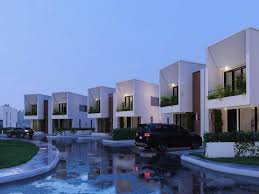
Purpose-built Student Accommodation & Co-living: As stated earlier, the expected higher tertiary enrolment that will be occasioned by the No-Fee-Stress Policy, coupled with the impact of rapid urbanization, will make purpose-built student accommodation and co-living space properties one of the most promising real estate investments alternatives around university towns across the country.
Grade-A Office & Logistics: The easing macroeconomic indices is likely to attract many foreign direct investments as well as small and large scale multinational companies. This influx will expand demand for Grade A offices and logistics properties going into 2026 and beyond.
Short-term Rentals: Short-term residential rentals such as Airbnb and serviced apartments will flourish. This will be triggered by the government’s all year longtourism recovery initiatives such as the Black Star Experience, Beyond the Return, the Diaspora Summit 2025 and the gains of easing macroeconomic indices. This is already happening in this last quarter of the year 2025 and will continue, thereby creating investment opportunities for both developers and investors in this niche sector in 2026 and beyond.
Retail Spaces: A sustained macrocosmic environment is likely to boost consumer spending, rentals of commercial or retail spaces et cetera. This again will create opportunity for sector players in this niche. So, for those who have abandoned uncompleted commercial projects in prime areas should begin to finish up in order to tap into this demand.
Potential Risks and Challenges
Despite the fact that the indices look promising, deep structural challenges; notably, the housing deficit, access to long-term finance and high construction costs, will continue to shape market outcomes. Whether 2026 becomes a year of broad-based recovery or segmented growth will depend largely on policy execution, financing innovation, private-sector adaptability and our ability to deal with chronic structural challenges.
Structural Challenges: Chronic structural limitations such as land litigation, land acquisition challenges, infrastructure deficits and financing constraints, still remains a significant limiting factor for large-scale social housing delivery (Ministry of Works and Housing, 2023).
Weak Macroeconomic Fundamentals: Many experts have warned that, the Bank of Ghana’s injection of US$10 million into the forex market is primarily a short-term stabilization tool. It has helped eased excess demand for foreign currency, smoothen volatility and signaled the central bank’s commitment to defending the Cedi. In the immediate term, such intervention can improve market sentiment, slow depreciation, support import-dependent sectors and help anchor inflation expectations, which we are currently seeing. However, the scale of the injection is modest relative to total forex demand, meaning its impact is largely psychological and temporary, not structural.
If the BoG is unable to continue these interventions, particularly when the Cedi is not fundamentally supported by strong production, exports and forex inflows, the currency will likely revert to its underlying weaknesses. This could result in renewed depreciation pressure, higher imported inflation, rising interest rates and increased cost of servicing foreign-denominated debt. Over time, dwindling reserves would also weaken the BoG’s credibility and reduce investor confidence, potentially triggering capital outflows and speculative attacks on the currency. This has the potential to reverse many of the gains and projected prospects discussed in this article. Investors must therefore be guided.
Material-price Volatility: Reversal in building-input prices and fuel prices would most likely squeeze margins on affordable projects and by extension affecting the prospects of the entire industry. Therefore, as one is investing, caution must be exercised in this regard.
Stay tuned for the concluding part of this insightful article….
The Author, Daniel Kontie is a young enthusiastic Ghanaian entrepreneur, the Executive Chairman of the Africa Infrastructure Group; the Group comprises the Africa Continental Engineering & Construction Network Ltd, the Falcon 48 Developers, the Africa Infrastructure Energy Ltd and the Africa Land Banking Investment Ltd. All these are infant establishments disrupting the conventional way of brand building across the globe. Daniel is a columnist, a writer and a member of the Built Environment Writers Association of Ghana. He can be contacted via the contacts: +233209032280 / +233209032280. Email Address: d.kontie@acecnltd.com. Website: https://www.acecnltd.com/